

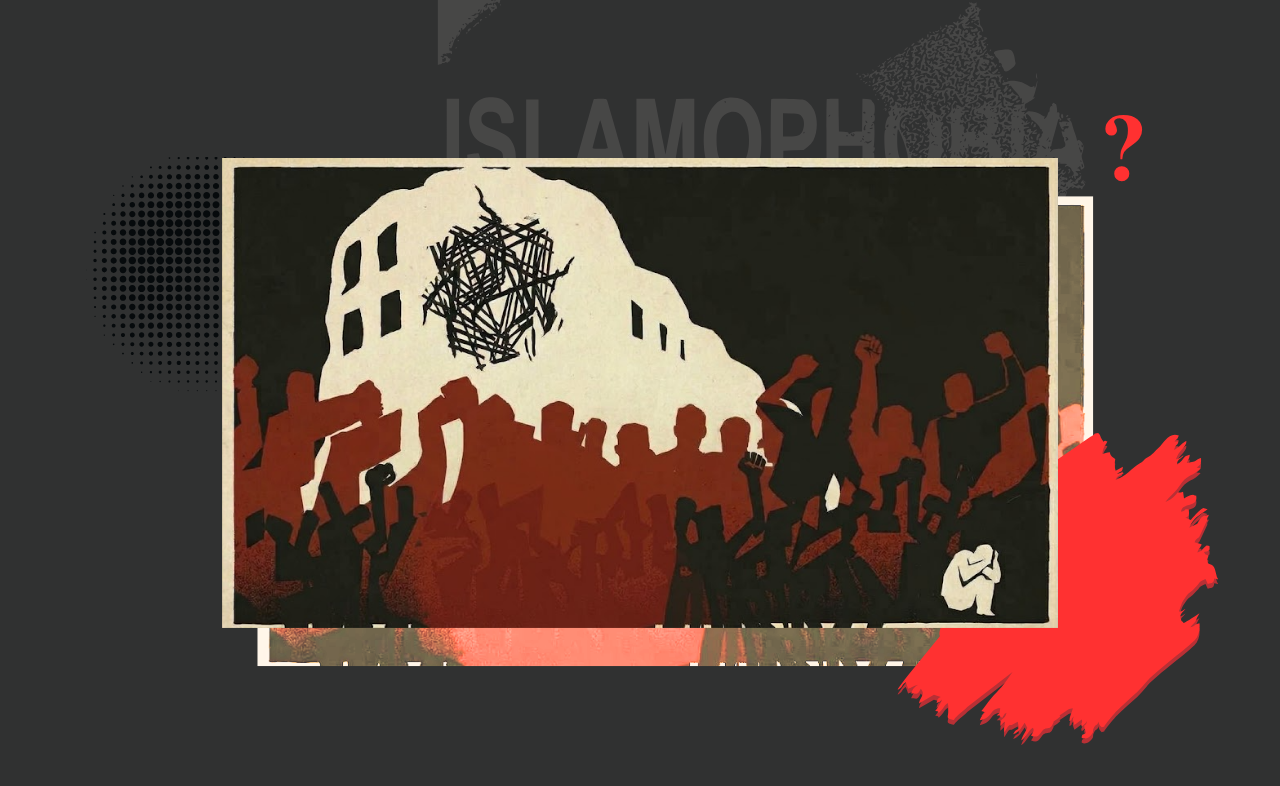
In July 2025, a Hindu teenager was arrested in Rangpur over a Facebook post said to insult the Prophet, and a mob ransacked at least twelve Hindu homes. In December 2025, a garment worker named Dipu Chandra Das was taken from his factory in Bhaluka, beaten to death, his body hung from a tree and set on fire, over an accusation investigators later found no evidence for. In April 2026, a crowd in Kushtia hacked a Sufi pir to death and burned his shrine, after an old video resurfaced online. On October 13, in Satkhira, Wahiduzzaman Shamim was beaten after a recording of a domestic argument circulated online with a blasphemy allegation. Police rescued him and took him to a hospital, but a crowd of 200 to 250 followed, took him out and beat him again, and he died on the way to another hospital. His family says he was mentally unwell. The targets differ in faith, age and district. The sequence does not: an accusation surfaces, a crowd forms, and punishment arrives before proof.
In the wake of such brutality, the term ‘Islamophobia’ is often deployed to dismiss the resulting public anxiety as irrational prejudice. However, when violence keeps arriving in the same shape, human cognition does not see a ‘phobia’; it sees a pattern. We must ask: is the fear of a minority worker like Dipu irrational, or is it a survival-driven response to a visible breakdown in institutional justice? To address this, we must move beyond labels and look at the hard reality of pattern recognition and religious responsibility.
Islamophobia is often described as an irrational fear rooted in prejudice and ignorance. Where it means suspicion of ordinary Muslims for their faith, that description is accurate and the label is earned. However, this characterization becomes contested when individuals argue that their fear is not imagined but learned through repeated exposure to violent acts carried out explicitly in the name of Islam. The debate is not about whether bigotry exists, but about whether fear that emerges from observable patterns in public life can legitimately be dismissed as bigotry. The object of that fear matters. Fear of Muslim neighbors or colleagues finds no support in these cases. Fear of an armed crowd, and of a system that does not stop it, finds plenty.
At the heart of this argument lies the issue of pattern recognition. When acts of mass violence are repeatedly committed by individuals invoking Islamic identity, symbolism, or justification, observers may begin to associate the violence with the ideology being cited. Human cognition is wired to detect patterns as a means of survival. When the same justification for violence appears again and again in public discourse and media reporting, fear can become a conditioned response rather than an abstract prejudice. In this sense, labeling such fear as Islamophobia can appear to shift responsibility away from perpetrators and onto those who feel threatened. In Bangladesh, the pattern now spans more than a year and four districts.
The pattern is also institutional, and that is where the fear is hardest to dismiss. Bangladesh’s penal code already punishes deliberate insults to religious feelings, so a grievance has a legal route. In Rangpur, a crowd came for the accused boy’s Hindu neighbors after police had already arrested him. In Kushtia, police say local parties had assured them nothing would happen; a crowd of hundreds still reached the shrine. In Bhaluka, investigators found no evidence for the accusation against Dipu Chandra Das; two factory managers were among those arrested, and his family said he had disputed production demands with management. In Satkhira, police did rescue the man, and the crowd took him back anyway; the man accused of rallying it on Facebook Live was arrested four days later. In each case the crowd did not fill a vacuum; it replaced the courts. An accusation of blasphemy has become the cheapest weapon available in a quarrel, because it summons a crowd instead of a judge. A person who knows that any colleague or neighbor can raise the charge, and that a crowd may not answer for acting on it, is not being irrational when he is afraid.
Those who see the term as a way of dismissing fear rather than explaining it insist they are not making theological claims about Islam’s doctrines. Instead, they focus on practical consequences. Even if Islam, in its doctrinal form, does not promote violence, that offers little reassurance to anyone confronted with an attack justified through religious rhetoric. That includes Muslims. The Sufi pir killed in Kushtia was himself a Muslim spiritual leader, attacked by a crowd that claimed to defend Islam, and the man killed in Satkhira was accused of insulting it. In moments of crisis, philosophical clarification cannot disarm an attacker. Survival, not doctrinal nuance, becomes the primary concern. From this perspective, keeping one’s distance from a crowd that invokes religion is framed as a rational act of self-preservation rather than an expression of hatred.
Comparisons with other faiths are less useful than they first appear. Every large and ancient tradition has been invoked to justify violence. What sets this pattern apart is not a religion but a mechanism: an accusation that anyone can make, that no one must prove, and that a crowd can act on within a day. That mechanism raises uncomfortable questions about interpretation, transmission, and accountability within modern religious movements, including Islam.
Ultimately, the central claim of this argument is not that Islam is inherently violent. Rather, it is that responsibility cannot be deflected entirely onto misinterpretation. Bangladesh’s interim government and its leading rights group, Ain o Salish Kendra, condemned the Bhaluka killing, and that matters. But a statement issued after a body is burned is not the same as a challenge made before the crowd forms. When violence persists across cultures, classes, and levels of education under a shared religious banner, internal self-examination becomes unavoidable, and it has to include the pulpit. Police say an imam led the crowd in Bhaluka, and he has been arrested; his guilt is for a court to decide. But if a religious title can gather a crowd, it can also disperse one. The authority that mobs borrow is the authority best placed to withdraw it.
Blaming fear-stricken individuals for their reactions does little to reduce social tension, because what is being labeled as Islamophobia may not always be irrational fear. Fear fades when it stops being earned, and that requires three things: prosecutions that reach the instigators and not only the foot soldiers; a police protocol under which an accusation leads to custody, investigation and protection for the accused and his neighbors, and a rescued man stays guarded until the crowd has gone; and religious leaders who name each killing from the pulpit and say plainly that an accusation is not proof and no crowd is a court. Without them, calls for tolerance will sound hollow to those who feel perpetually endangered. The next Dipu or Shamim will not be saved by better theology alone. He will be saved by police who stay beside him until the crowd is gone, a court that convicts, and a preacher who refuses to lend a crowd his authority.
