

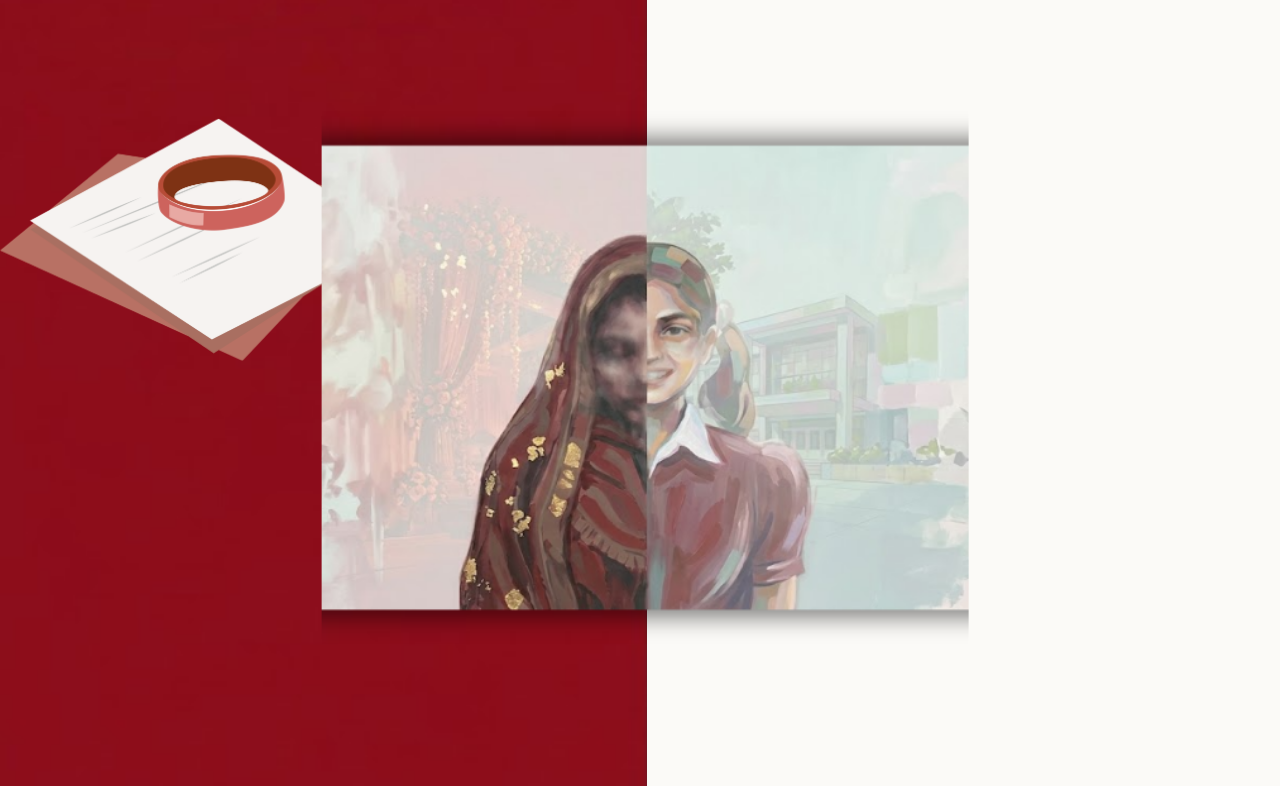
For years, Bangladesh’s campaign against child marriage had one unacknowledged ally, which was embarrassment. Families that married off a fourteen-year-old tended to explain themselves: poverty, a sick father, a neighbour’s talk. That need to explain gave a teacher or a local official something to press on. The recent campaign in favour of early marriage, carried through sermons, short videos and village conversation, removes the need. It presents the practice as something to be proud of and, increasingly, as a religious duty. Surveys lag behind sentiment by years, so no data yet shows what this has done to the numbers, and it would be premature to claim otherwise. But the mechanism is visible, and it deserves attention.
The religious framing carries the weight, and its natural venue is the waz mahfil. These preaching gatherings exist for religious advice, but they also take up political and social questions. Television Islamic Q&A programmes have long given a short answer on age: marriage is permissible once a girl reaches puberty, and the faith sets no prohibition. The campaign turns that answer into a challenge. Islam fixes no age, puberty signals readiness, and a state law that says otherwise is a human imposition on what God has permitted. Delay invites sin, particularly where girls are visible in schools and on phones. Marriage becomes protection of honour, and anyone who objects is painted as the agent of foreign money.
The argument persuades because it begins with a genuine fear. Parents do worry about a daughter’s safety and reputation, and here is a respectable answer to the worry. It also comes with borrowed authority. In a rural household a preacher with a large following outweighs a union parishad official reading out the Child Marriage Restraint Act. In a village with one mosque and one loudspeaker, that imbalance is not abstract. The rebuttals exist and are sound. Several Muslim-majority countries set the minimum age at 18 or above, valid consent is a condition of an Islamic marriage, and a child cannot meaningfully give it. They simply travel less far than the original claim.
Prevention in Bangladesh runs on a chain. A teacher, classmate or neighbour passes a tip to someone official, the upazila nirbahi officer or a magistrate steps in, and the family signs an undertaking. Every link requires social permission to meddle in another household’s affairs, and a religious framing withdraws that permission. The teacher does not want to be seen opposing the faith. The elected local representative, who needs votes, thinks twice. Mobile courts, which depend on tip-offs, get fewer of them. A recent Prothom Alo report on a marriage being arranged for a girl not yet twelve noted that officials who receive such tip-offs often cannot reach remote areas. Where the state is already stretched thin, a community that has stopped reporting leaves it with almost nothing. Adolescent clubs that trained girls to speak up now risk seeing them labelled irreligious.
The law has left a door ajar for the campaign. The 2017 Act kept the ages at 18 for women and 21 for men, then added a special provision allowing marriage below those ages with court approval and parental consent, without stating any minimum. Rights groups warned at the time that it would be abused. Now advocates of early marriage can point to the exception as proof that the state itself tolerates the practice, and campaigners find themselves defending a statute that undercuts them. The baseline is poor to begin with. The 2025 Multiple Indicator Cluster Survey found that 55.8 per cent of women aged 18 to 49 had married before 18, and the UN population fund has warned that at the current pace, ending child marriage in Bangladesh could take more than 200 years.
The weakest part of the pro-marriage case is that it ends at the wedding. Girls who marry young tend to leave school, have children sooner and face higher obstetric risks, from prolonged labour to injuries that last a lifetime. Their children, too, are born into higher risk. These girls usually have little say in the household, and violence at home is more common where the husband is much older or the wife dependent. The boys do not escape: a seventeen-year-old husband with no steady income becomes a father before he becomes an earner. None of this is mentioned in the sermons or videos, because consequences complicate a message that works best as a plain instruction.
Under the religious logic sits an economic one that is seldom admitted. Dowry demands tend to rise with a girl’s age and education, so marrying early can look like a bargain, especially in a household with several daughters and an uncertain harvest. Describing that calculation as devotion makes it easier to live with. Prevention messaging that talks only about health statistics and legal penalties misses this. Parents often know the risks already and have simply run out of alternatives.
What follows for campaigners is uncomfortable. A theological claim cannot be answered with a leaflet on maternal mortality. It needs religious voices of equal standing, and they exist: imams and madrasa teachers who argue that marriage requires maturity and consent. Researchers have noted before that preachers could play a strong role in stopping child marriage, but often join in only half-heartedly. That half-heartedness is the gap to close. Beyond messaging, the structural work counts for more: stipends that keep girls in school past class ten, safer journeys to and from it, jobs for women that give a family a reason to wait.
There is a hopeful reading, in which a public argument forces a debate that polite silence had postponed. It holds only if credible religious and community voices join in, and soon. Otherwise the likelier result is quieter: doubt becomes respectable, and a family hesitating over a daughter’s wedding finds permission to go ahead instead of a reason to wait. Prevention worked where child marriage was embarrassing. Embarrassment comes back when people see the consequences plainly and hear them from voices they trust. That will take longer than a campaign cycle.
