

In 1983, the radical feminist Andrea Dworkin published a book that attempted to answer a question that still haunts the liberal imagination: Why do women support political movements that openly seek to subordinate them?
In Right-Wing Women, Dworkin stripped away the comfortable illusion that conservative women are brainwashed dupes or suffering from false consciousness. Instead, she offered a chillingly rational explanation. She argued that in a world defined by male violence—a world of rape, battery, and economic precariousness—right-wing women are not voting for oppression; they are making a calculated survival bet. They trade their autonomy for protection. They accept the role of the obedient “wife” because the only available alternative they see is the exposed, vulnerable “whore.”
I have found myself returning to Dworkin’s bleak text recently, not to understand the American culture wars, but to make sense of the interviews I have been watching in my own country, Bangladesh.
When I listen to the female members of Jamaat-e-Islami and other Islamist factions, I do not hear women who are confused. I hear women who have looked at the “liberation” offered by secular modernity and rejected it as a fraud.
In media interviews, these women speak with a terrifying clarity. They dismiss the female candidates of secular parties as mere “tokens”—women paraded for optics but stripped of genuine respect. In contrast, the women of the Islamist Right argue that their movement offers them a defined, dignified place. One woman famously declared that “patriarchal culture and politics will be the shining factor for Bangladesh,” asserting that the country needs patriarchy to shine. They argue that Islam protects women by assigning them the role of “nurturer,” shielding them from the burden of leadership for which they believe they were not born.
To the liberal ear, this sounds like self-sabotage. But through the lens of Dworkin’s analysis, it is a critique of a failed modernity.
When these women speak of “moral decay,” they are not just talking about theology; they are talking about safety. They point to the “city girls”—women who wear Western clothes, work in mixed environments, and pursue financial independence. But where I see freedom, they see women who are—”wasted” or spoiled. They see women who have become, in Dworkin’s terms, “public property.”
To the right-wing woman, the freedom to work is the freedom to be harassed on the bus. The freedom to dress as one pleases is the freedom to be objectified by a thousand eyes rather than protected by one. The freedom to divorce—often cited as a triumph of women’s rights—is viewed by them as the freedom to be abandoned by a husband for a younger woman, leaving the first wife destitute.
They look at the chaos of the streets and the precariousness of the modern economy, and they choose the “form, shelter, and rules” of the fundamentalist home. They wear the burqa not as a symbol of submission, but as a shield against the “prostitution” of the public gaze. It is a bleak realism: If I play by the strict rules of the patriarch, he is obligated to take care of me.
However, this transaction comes at a steep, often invisible price—one that the male leaders of these movements are all too eager to exploit.
At every rally, these leaders thunder from the podiums: “We must protect our mothers and sisters!” They promise “respectful jobs” for “our mothers and sisters.” They never say “women.” They never say “citizens.”
For years, I felt a vague unease hearing this. Now, I realize it is not just annoying; it is the linchpin of the trap. By refusing to call us women—by insisting on “mother” and “sister”—they are stripping us of our individual humanity. A mother is a function. A sister is a relative. Neither is a person with her own sovereignty.
This rhetoric is what Dworkin identified as the “separate but equal” lie. This attitude places women on a pedestal so high we cannot breathe. When they say they will “protect” us, they are implicitly threatening us. They are saying: You are safe only as long as you remain a mother or a sister. Step off the pedestal, try to be a leader, try to be an equal, and you forfeit your protection.
It is offensive because it frames our rights not as inherent human claims, but as rewards for good behavior. It suggests that a woman who is not a “nurturer,” or who has no man to be a “sister” to, is unworthy of safety.
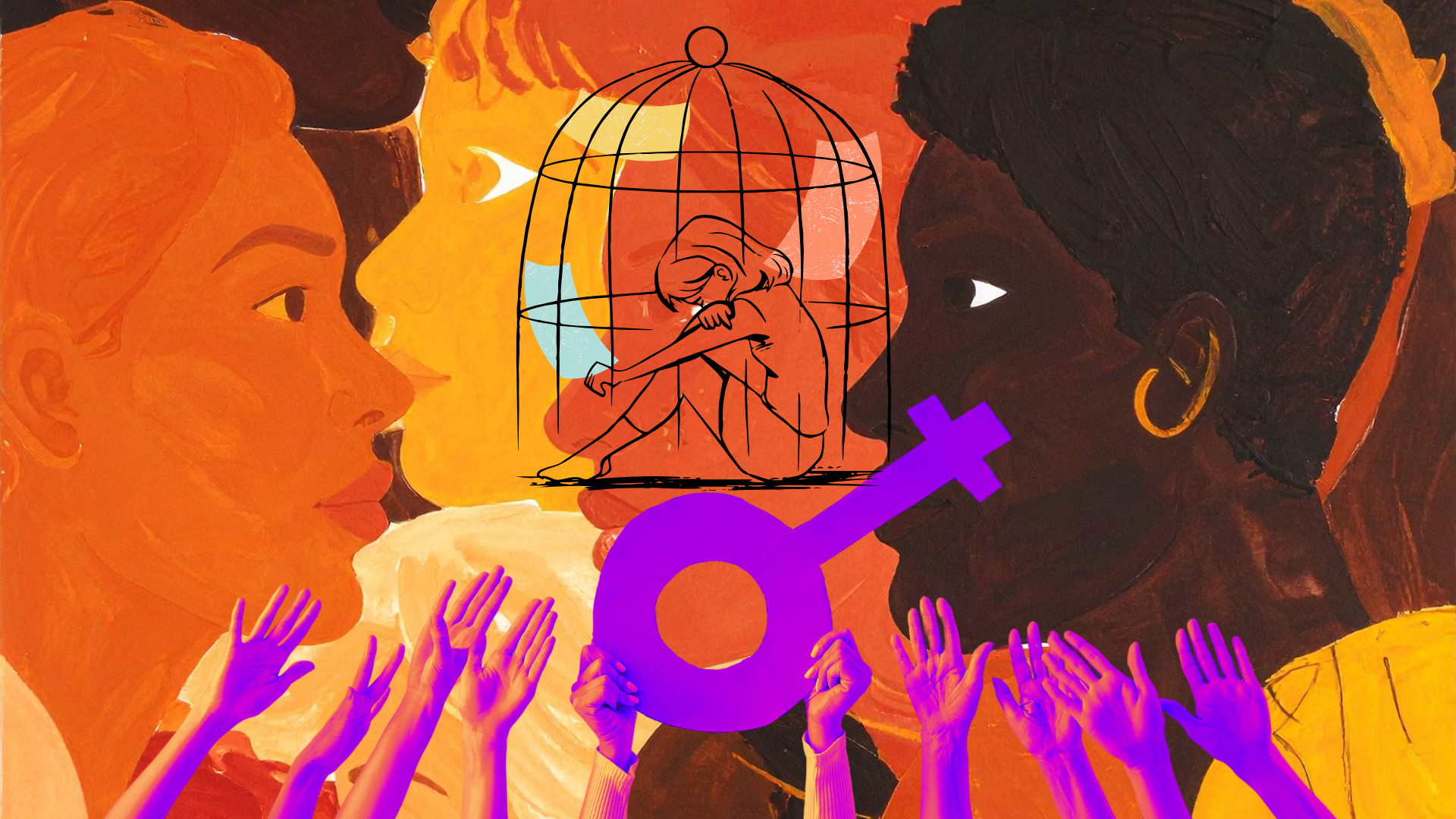
The tragedy of the right-wing woman in Bangladesh is not that she is wrong about the dangers of the world; she is right. The streets are unsafe. The workplace is often predatory. But the solution she has embraced—the golden cage of patriarchal protection—relies on the very threat it claims to solve.
We should not dismiss these women as “tokens” of the Right. We must understand that until the secular world can offer a safety that does not require submission, the promise of the “shining” patriarchy will continue to find buyers among women who are simply trying to survive.
