

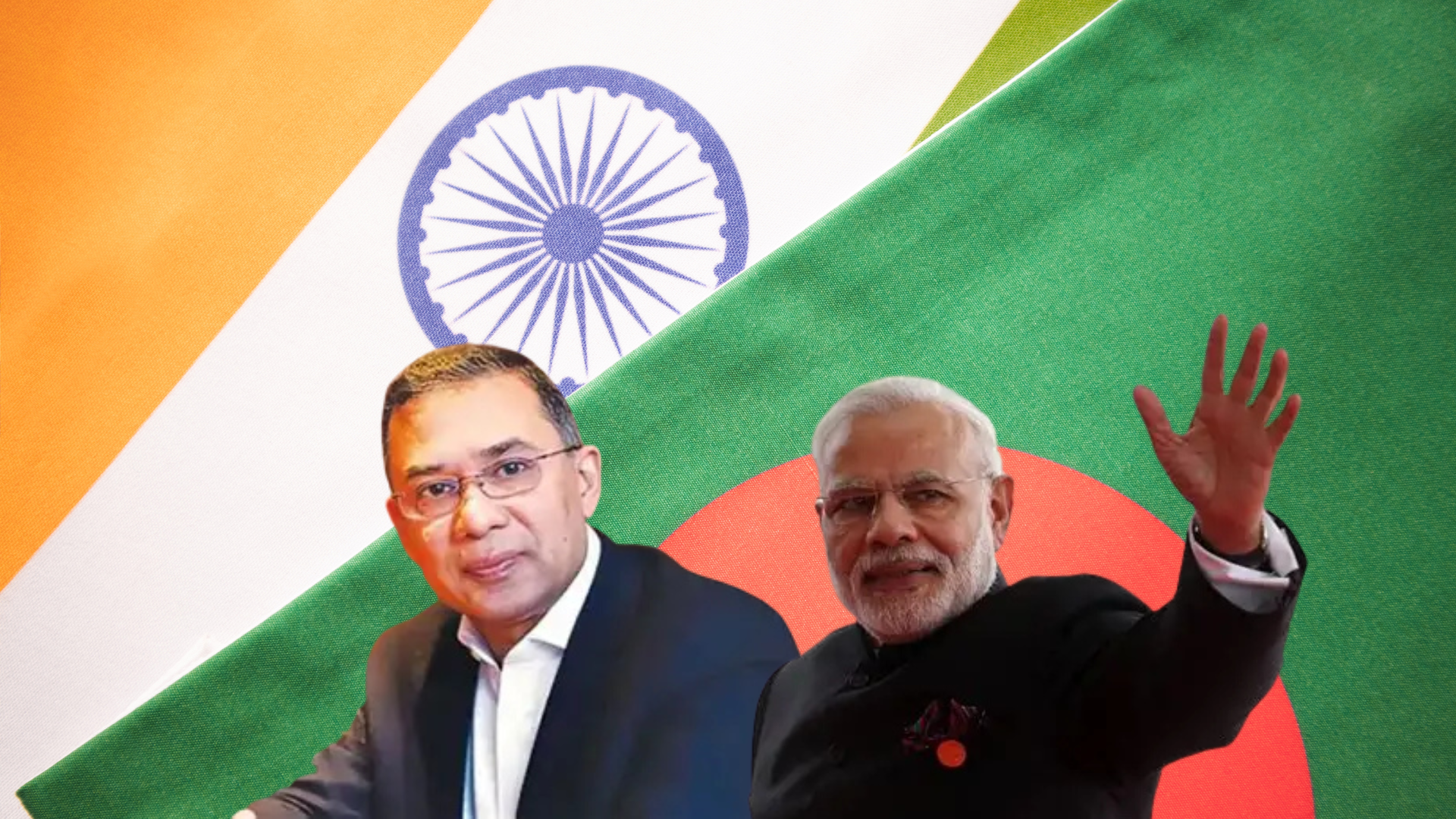
In South Asia’s shifting geopolitical theatre, few bilateral relationships are as layered, emotionally charged, and strategically consequential as that between Bangladesh and India. Bound by geography, history, language, rivers, and a shared liberation legacy, Dhaka–Delhi ties have oscillated between warmth and wariness. Today, amid a new political phase in Dhaka and evolving regional power dynamics, a fundamental question emerges: is this relationship entering a phase of hard-nosed realpolitik, or is it undergoing a deeper recalibration?
The answer, increasingly, appears to be both.
From Historical Sentiment to Strategic Calculation
Since 1971, bilateral ties have carried an emotional undercurrent rooted in India’s role during Bangladesh’s Liberation War. For decades, this shared history shaped diplomatic symbolism and political narratives. Yet in contemporary geopolitics, sentiment alone no longer defines state behaviour.
Domestic political transitions in Dhaka, combined with India’s expanding regional ambitions, have injected greater pragmatism into the relationship.
India’s strategic outlook has widened significantly over the past decade. Its “Neighbourhood First” and “Act East” policies reflect a broader ambition to consolidate influence across South Asia and the Indo-Pacific. Within this framework, Bangladesh occupies a pivotal position—geographically at the junction of the Bay of Bengal and Southeast Asia, and strategically central to connectivity corridors linking South and East Asia.
At the same time, Bangladesh’s political discourse has become more assertive. A younger, more globally connected demographic increasingly prioritises sovereignty, economic equity, and balanced diplomacy. The expectation is no longer one-sided accommodation but reciprocal respect.
Trade, Transit and Trust Deficits
Economically, the relationship has deepened considerably. Bilateral trade has expanded, connectivity projects have multiplied, and energy cooperation has strengthened. Rail, road, and inland waterway links signal a shared commitment to regional integration.
Yet structural asymmetries persist. Bangladesh continues to import significantly more from India than it exports, creating periodic concerns in Dhaka about dependency and imbalance. For any meaningful recalibration, economic engagement must move toward greater reciprocity—through export diversification, reduction of non-tariff barriers, and expanded joint ventures in technology, manufacturing, and energy value chains.
Water-sharing remains an equally sensitive issue. Rivers physically bind the two countries but politically divide them. While the Ganges Water Treaty remains a landmark example of cooperation, unresolved disputes over other transboundary rivers continue to generate friction. In the evolving political context, Bangladesh is likely to adopt a more rights-based and assertive stance on equitable water governance.
The China Factor and Strategic Balancing
No analysis of Dhaka–Delhi relations is complete without the broader regional geometry, particularly China’s expanding footprint in South Asia. Through infrastructure financing, industrial investments, and Belt and Road Initiative projects, Beijing has become a major development partner for Bangladesh.
For India, this raises strategic concerns linked to its eastern periphery and regional security calculus. For Bangladesh, however, engagement with China is primarily developmental rather than geopolitical. It reflects financing needs, infrastructure gaps, and industrial aspirations rather than ideological alignment.
This divergence highlights the essence of recalibration. Bangladesh is increasingly pursuing a multi-vector foreign policy—deepening engagement with India while simultaneously strengthening ties with China, the United States, Japan, and other partners. Rather than choosing sides, Dhaka seeks strategic flexibility through diversification.
India, in turn, faces a structural choice: interpret this balancing as a strategic challenge, or adapt to a more competitive regional environment where influence is no longer exclusive but earned.
Security Cooperation and Political Sensitivities
Security cooperation remains one of the strongest pillars of the bilateral relationship. Counterterrorism coordination, intelligence sharing, and border management have significantly reduced insurgent threats in India’s northeastern region. From Delhi’s perspective, Bangladesh’s cooperation has been strategically valuable.
However, domestic sensitivities complicate this domain. Border incidents and perceptions of unequal treatment of Bangladeshi citizens frequently influence public sentiment in Bangladesh. In moments of political transition, such perceptions can quickly translate into diplomatic tension.
For Dhaka’s leadership, recalibration is therefore not only policy-driven but also perceptual. In asymmetric relationships, symbolism matters. A tone of parity rather than patronage can play a decisive role in sustaining trust.
Regional Platforms and Emerging Alignments
Bangladesh’s increasing engagement in multilateral forums reflects its expanding diplomatic ambition. Platforms such as BIMSTEC and SAARC remain key arenas of interaction between Dhaka and Delhi.
With SAARC largely constrained by India–Pakistan tensions, BIMSTEC has gained renewed importance as a functional regional mechanism. It also provides Bangladesh with a strategic bridge toward Southeast Asia, while offering India an alternative framework for regional connectivity that bypasses South Asia’s political deadlock.
Beyond institutional platforms, shared challenges—climate change, energy transition, and supply chain restructuring—are reshaping cooperation. Bangladesh, highly vulnerable to climate risks, seeks stronger regional resilience frameworks. India’s technological capacity and financial scale can complement these needs, pushing cooperation beyond geopolitics into shared survival imperatives.
Public Perception and the Youth Factor
Perhaps the most underappreciated dimension of Dhaka–Delhi relations is the evolution of public sentiment. While governments negotiate infrastructure, trade, and security, citizens interpret relationships through everyday experiences—visa regimes, media narratives, and border realities.
A new generation of Bangladeshis, digitally connected and globally aware, increasingly evaluates foreign policy through the lens of national interest rather than historical gratitude. This shift introduces a more critical, but also more pragmatic, public discourse.
India, similarly, must engage beyond state-to-state diplomacy. Cultural exchange, academic mobility, and media engagement are essential tools for shaping long-term perceptions. Without societal goodwill, even strategically sound partnerships remain vulnerable.
Realpolitik or Recalibration?
The distinction between realpolitik and recalibration may be more semantic than substantive. Recalibration itself is an expression of realpolitik—an adjustment to shifting power realities and domestic expectations.
Bangladesh seeks strategic autonomy within structural constraints. India seeks regional stability while maintaining its strategic depth. Both are pursuing rational national interests within an increasingly multipolar environment.
The new political phase in Dhaka offers an opportunity to redefine the relationship not as one of asymmetry, but as negotiated interdependence. Geography ensures proximity; diplomacy determines quality.
For Bangladesh, the challenge lies in balancing assertiveness with stability. For India, it lies in adapting to a more confident neighbour that seeks partnership, not patronage.
Ultimately, the future of Dhaka–Delhi ties will depend less on historical sentiment and more on sustained reciprocity. If both sides embrace recalibration as necessity rather than concession, the relationship could evolve into one of South Asia’s most stable strategic anchors.
In an era defined by fluid alliances and rising uncertainty, such stability would be a regional asset far beyond bilateral significance.
