

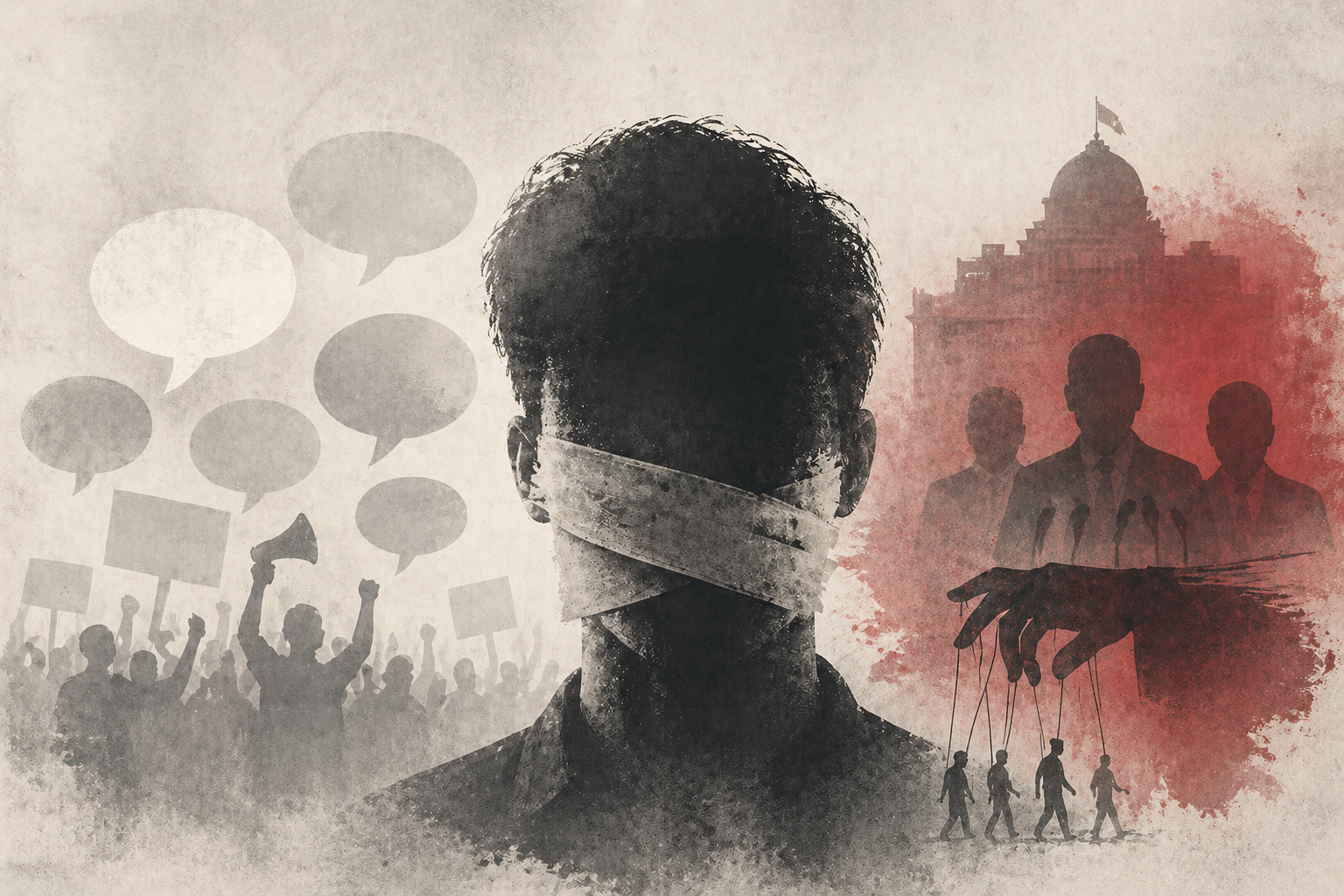
In any functioning democracy, the relationship between the state and its citizens is ultimately a test of tolerance; particularly the state’s tolerance for dissent and criticism. Yet in Bangladesh, as in many other political contexts, one recurring question remains unresolved: why is it so difficult for governments to clearly and credibly direct law enforcement not to arrest individuals for criticizing, or satirizing ruling party leaders, including ministers and the Prime Minister?
The issue is not merely legal; it is deeply political and cultural. Governments often perceive criticism, especially when it is sharp, sarcastic, or viral as a threat to authority rather than a feature of democratic engagement. As a result, even without explicit directives, a climate emerges where local authorities, police, or politically motivated actors interpret criticism as grounds for punitive action. This ambiguity creates a chilling effect: citizens self-censor, satire disappears, and public discourse becomes sanitized and less truthful.
Recent history has already demonstrated that arresting individuals for criticism or mockery is not only ineffective but counterproductive. Arresting critics has never worked, as we have seen in Awami League regime. The suppression does not eliminate dissent; it amplifies it, and often grants greater visibility to the very voices the state seeks to silence. Many citizens, therefore, placed cautious hope in Bangladesh Nationalist Party ((BNP), expecting a more tolerant approach toward criticism, satire, and opposition voices. Yet recent incidents, where individuals have reportedly faced police action simply for sharing or commenting on social media posts, risk undermining that expectation. If BNP continues down this path, it not only reproduces the same patterns it once opposed but also damages its own credibility as a pro-people political party. A party that aspires to democratic legitimacy cannot afford to treat dissent as a threat; it must instead demonstrate that it can coexist with, and even learn from, criticism.
Having said that, the government’s concern about misinformation and fake news is not unfounded. The rapid spread of disinformation especially through social media can incite unrest, damage reputations, and destabilize communities. However, conflating malicious disinformation with legitimate criticism is a category error with serious consequences. The solution cannot be indiscriminate arrests. Instead, a more calibrated and effective approach is needed. Financial penalties, for instance, can serve as a deterrent against the deliberate spread of false information without criminalizing speech outright. If individuals or groups are found to have knowingly disseminated harmful disinformation, imposing substantial fines could discourage repeat behaviour. Equally important is the establishment of a speedy and independent judicial mechanism to adjudicate such cases. Without these safeguards, even well-intentioned laws risk becoming tools of selective enforcement.
If a government is confident in its mandate and performance, it should not fear criticism. On the contrary, it should welcome it as a mechanism of accountability and improvement.
