

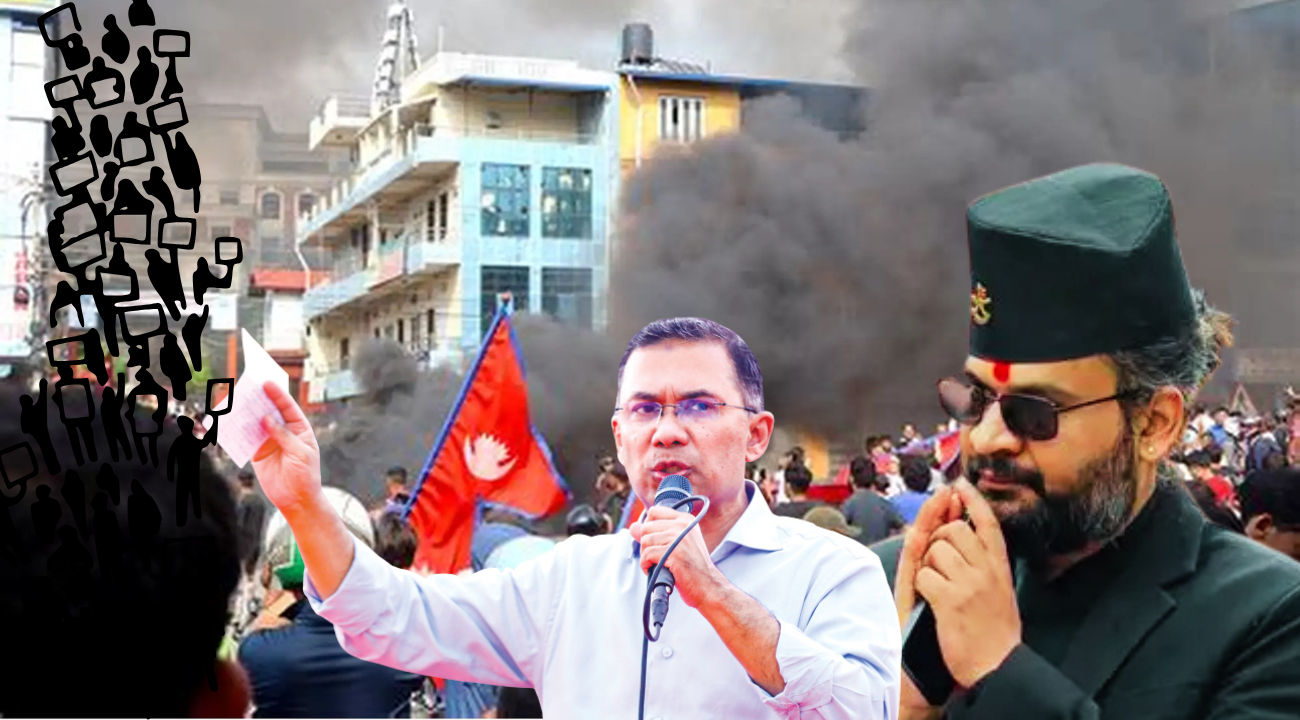
There is a particular kind of frustration that seems to travel easily across borders these days. Born into smartphones, precarious jobs, and a political class that feels perpetually out of touch, South Asia’s Gen Z has developed a shared vocabulary of disillusionment. But shared frustration doesn’t always produce shared outcomes—in Nepal, that energy pushed an outsider like Balen Shah into office almost overnight, while in Bangladesh, something similar was supposed to happen with the National Citizen Party, and instead the NCP has drifted toward an alliance with Bangladesh Jamaat-e-Islami, one of the very establishment forces many young voters claimed to be rejecting.
Part of the answer is structural. Nepal’s political system, still working through the aftershocks of the monarchy’s abolition in 2008, never fully hardened into the kind of two-camp dominance that defines Bangladeshi politics. The old parties still mattered, but they no longer held a monopoly on legitimacy. That crack in the foundation is what let someone like Shah—an engineer, a rapper, a man with almost no party machinery behind him—walk into Kathmandu’s mayoral office on the strength of volunteers, viral videos, and an anti-corruption message voters were hungry to hear.
For a lot of young Nepalis, the vote for Shah wasn’t really about policy. It was closer to a generational exhale—a way of saying no to a political culture they’d grown up watching fail them. Ajay Dixit, a Kathmandu-based policy analyst, put it plainly when he said that these voters weren’t just backing a candidate; they were rebelling against an entire system. And crucially, Nepal’s local elections gave that rebellion somewhere to go. A mayoral race in Kathmandu didn’t threaten the national order, which meant voters could afford to experiment.
Bangladesh offers no such safety valve. Politics here has been built for decades around the entrenched rivalry between the Awami League and the BNP—two organizations with financial depth, regional networks, and voter bases inherited across generations. Into that landscape, a new party doesn’t just need enthusiasm. It needs polling agents in a thousand upazilas, alliances that can survive a general election, and infrastructure that takes years, not a news cycle, to build. The NCP generated real curiosity, especially among younger voters looking for something other than the usual choice between two familiar camps, but curiosity is not the same as a ground organization, and without one, symbolic momentum tends to evaporate right around the time ballots are actually cast. The alignment with Jamaat is less a betrayal of principle than an admission of arithmetic: in Bangladesh, surviving inside the system usually means joining a bloc, not challenging one from outside.
Online energy converts into votes very differently in the two countries. Gen Z everywhere lives a good part of its political life on a screen, and both Nepal and Bangladesh have seen that show up as viral outrage, meme warfare, hashtag campaigns. Elections, though, happen offline, at polling booths, and that’s where the paths diverge—in Nepal, volunteer networks took the online enthusiasm and walked it door to door, while in Bangladesh that translation mechanism barely exists. The political scientist Ali Riaz has made the point that a trending hashtag is not the same thing as a polling station agent, and the line captures why visibility online hasn’t become an organization on the ground.
Risk plays a role too, and it’s more psychological than structural. Voting for an outsider in a low-stakes local race, the way Kathmandu voters did, costs very little; the national balance of power doesn’t hinge on who becomes mayor. Bangladeshi elections rarely offer that kind of room. They tend to be read as existential contests between two camps, and in an environment like that, throwing a vote away on a party unlikely to win feels less like rebellion and more like abstention.
None of this is an argument that Bangladeshi youth care less, or are somehow less politically awake than their Nepali counterparts—if anything, the anger over corruption and stagnation runs just as deep here. But anger needs an opening to actually do something, and Nepal’s institutions happened to have one where Bangladesh’s don’t. Whether that changes as younger voters slowly become the majority of the electorate is a question no one in Dhaka can answer with much confidence right now.
