

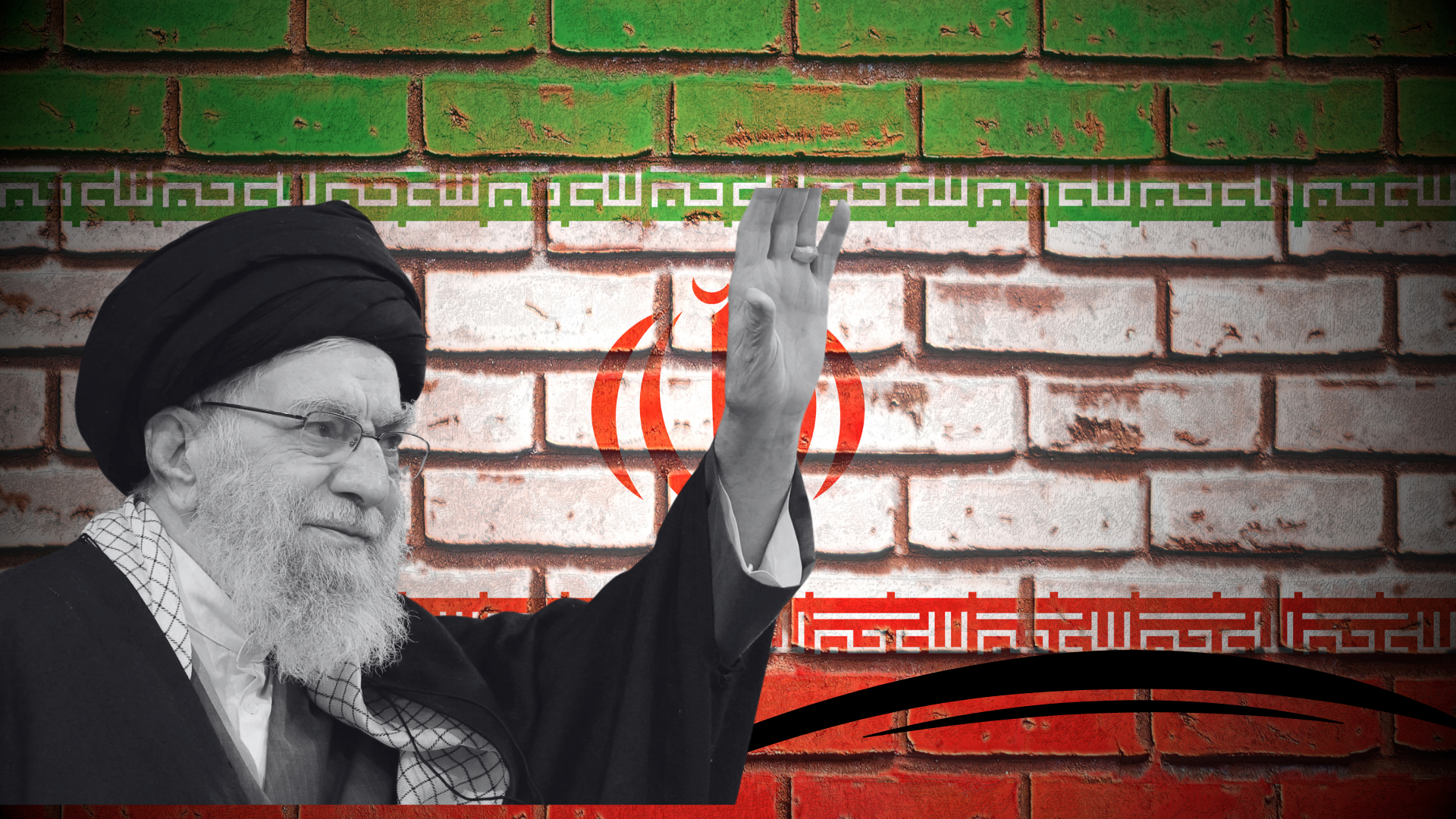
The death of Ali Khamenei has reopened a question that had long simmered beneath the surface of Iranian politics: if the Islamic Republic is to change, who has the moral and political right to bring about that change? For years, critics of the clerical establishment have argued that the system—often described as Khameneism—has exhausted its legitimacy. Yet the method of its potential undoing matters as much as the outcome. A tyranny may need to fall, but the hand that pushes it can determine whether a nation finds freedom or descends into deeper instability.
The Islamic Republic’s power structure has always revolved around a fusion of religious authority and security dominance. While elections occur, ultimate sovereignty rests with the Supreme Leader and institutions aligned with him, particularly the Revolutionary Guard. Over time, political pluralism narrowed, dissent faced repression, and reformist currents were either absorbed or sidelined. The protests that erupted in recent years—especially those led by women and youth—revealed a generational rift between state ideology and societal aspirations. The demand was not merely economic relief but dignity, representation, and personal freedom.
Yet history offers a sobering lesson: internal dissatisfaction does not automatically translate into coherent transformation. Authoritarian systems often endure because they monopolize coercive force and fragment opposition. In Iran’s case, the security establishment remains deeply entrenched. The question, then, is whether Khamenei’s death creates space for internal recalibration—or whether it triggers consolidation by hardliners determined to preserve the system intact.
Complicating this delicate transition is the shadow of foreign intervention. Tensions involving the United States and Israel have long shaped Iran’s strategic environment. External pressure—whether through sanctions, covert operations, or military threats—has often strengthened the narrative of encirclement promoted by Tehran’s hardliners. In authoritarian contexts, foreign hostility can become a gift to the regime, enabling it to conflate dissent with treason and nationalism with loyalty to the state.
This is the moral paradox at the heart of the debate. If external actors weaken an authoritarian regime, are they not indirectly aiding the cause of freedom? The answer is more complicated. When change is perceived as foreign engineered, it risks losing domestic legitimacy. Political transformation imposed or accelerated from outside frequently produces fragile states, not stable democracies. National pride, historical memory, and suspicion of foreign manipulation run deep in Iran. A transition that appears scripted in Washington or Tel Aviv would likely provoke backlash, empowering the very forces it seeks to undermine.
The scenario landscape after Khamenei’s death can be broadly divided into four pathways.
First, controlled continuity. In this scenario, elite consensus produces a successor who preserves the ideological framework while adjusting tactics. The Revolutionary Guard plays kingmaker, ensuring that strategic priorities—regional influence, nuclear posture, internal security—remain unchanged. Limited reforms might be introduced to placate public frustration, but structural power would remain concentrated. This path prioritizes regime survival over systemic transformation.
Second, hardline consolidation. Leadership uncertainty can embolden the most security-oriented factions. Fearing fragmentation, they may tighten restrictions, suppress dissent more aggressively, and frame any unrest as foreign sabotage. Ironically, foreign pressure could accelerate this outcome, providing justification for emergency measures. In this scenario, the state becomes more militarized, less accountable, and increasingly isolated.
Third, negotiated internal reform. This is the most hopeful yet complex path. It would require elements within the establishment to recognize that long-term stability demands greater political inclusion and social liberalization. Reform would not mean instant democratization but gradual recalibration—loosening cultural restrictions, expanding electoral competitiveness, and redefining the relationship between clerical authority and republican institutions. Crucially, such reform must emerge from internal bargaining rather than external diktat. Its durability would depend on whether it resonates with public aspirations.
Fourth, rupture and fragmentation. If elite competition spirals and public unrest intensify simultaneously, the result could be systemic fracture. Economic hardship, factional rivalry, and foreign escalation might converge, creating a volatile mix. In the worst case, regional actors could exploit internal divisions, transforming Iran into a theatre of proxy conflict. This is the scenario most likely if foreign intervention escalates during a fragile succession moment.
Each pathway underscores a central truth: legitimacy is the decisive variable. Authoritarian systems can survive economic crisis and diplomatic isolation, but they struggle when their internal social contract collapses. Conversely, even a deeply flawed system can endure if citizens believe that alternatives threaten sovereignty or national unity.
Iran’s society is not monolithic. It contains reformists, conservatives, secular activists, religious traditionalists, and apolitical citizens focused on economic survival. Any sustainable transformation must navigate this complexity. A revolution driven solely by urban elites would lack rural resonance; a security-driven transition would lack generational support. The interplay between social forces and institutional power will shape outcomes more than any external strike.
Foreign actors, meanwhile, face their own strategic calculus. For Washington and Tel Aviv, Iran’s regional posture and nuclear ambitions remain paramount concerns. Yet overt attempts to shape Iran’s internal trajectory risk unintended consequences. The history of externally influenced regime change in the broader Middle East offers cautionary tales: power vacuums, militia proliferation, and long-term instability. Even when an authoritarian ruler falls, the absence of cohesive domestic institutions can transform liberation into chaos.
Thus, the proposition that ‘tyranny must fall’ cannot be separated from the question of agency. A change perceived as foreign imposed may satisfy geopolitical objectives but undermine democratic legitimacy. Conversely, a purely internal uprising without institutional preparation could produce instability. The challenge is to reconcile moral aspiration with strategic prudence.
For Iran, the coming period will test whether national sovereignty and popular will align. If reform is to be meaningful, it must be rooted in Iranian society—its civil networks, intellectual traditions, and political actors. External actors can influence conditions, but they cannot manufacture legitimacy. At most, they can avoid actions that entrench hardliners or discredit domestic dissent.
Ultimately, the fate of Khameneism hinges not only on leadership succession but on whether the state can adapt to a changing society. Demographic shifts, digital connectivity, and cultural evolution have already altered the political landscape. The system may attempt to resist these pressures, but history suggests that rigid structures eventually confront limits.
“Tyranny must fall—but by whose hand?” is not merely rhetorical. It is a strategic and ethical inquiry. If Iran’s future is to be stable and self-determined, transformation must arise from within. Foreign intervention may accelerate events, but it cannot substitute for internal consensus. The death of a leader does not automatically dismantle a system; nor does external pressure guarantee liberation.
In the end, the durability of change depends on ownership. A people who authors their own transition are more likely to defend it. A system reshaped under foreign shadow may remain contested and fragile. Iran now stands at a crossroads where sovereignty, legitimacy and geopolitical rivalry intersect. The direction it takes will reveal not only the fate of a regime but the deeper answer to a timeless question: when tyranny falls, whose hand truly delivers the blow?
