

The contemporary socio-legal landscape of Bangladesh presents a distressing
paradox: while the statutory framework promises a sanctuary of protection, the lived
reality of the nation’s youth is increasingly characterized by profound vulnerability. In
law, the State has formally pledged to secure the protection, dignity, and
developmental potential of every child. In practice, however, systemic failures are
compelling children to navigate an urban environment where their status as minors
offers little shield against physical battery, systemic abuse, or the ultimate tragedy of
peer-inflicted homicide.
Bangladesh’s constitutional and statutory framework for children is, in many respects,
progressive. The Constitution commits the State to special protection for children’s
development and welfare, and to securing their right to education, health and social
security. The Children Act 2013 is the central pillar, replacing the outdated 1974 law
and aligning the country’s juvenile justice system with international standards. It
defines a child as anyone under 18, creates Children’s Courts, and provides for
child‑friendly procedures, probation officers, and child development centres rather
than ordinary prisons.
Beyond this Act, a web of complementary laws exists. The Nari o Shishu Nirjatan
Daman Ain 2000 criminalises severe violence, sexual offences and trafficking against
women and children, imposing heavy penalties, including life imprisonment or death
in the most extreme cases. The Penal Code 1860 covers offences such as murder,
grievous hurt, kidnapping and abduction, with enhanced seriousness when children
are involved. The Prevention of Child Marriage Act 2017, the Domestic Violence
(Prevention and Protection) Act 2010, and special legislation on trafficking and
cybercrimes all add further layers of protection. At the policy level, the National
Children Policy 2011 and Bangladesh’s obligations under the UN Convention on the
Rights of the Child (UNCRC) commit the State to ensure children’s survival,
development, protection and participation.
Yet, the existence of laws has not prevented widespread violence against children,
nor has it stopped some children from themselves becoming brutal perpetrators.
The primary failure is not a lack of legislation, but the state’s persistent refusal to
operationalize it. Despite the 2013 Act being over a decade old, the administrative
framework required to keep children out of the criminal justice system, such as fully
functional Child Welfare Boards and specialized Probation Officers, remains
chronically underfunded and understaffed. This institutional inertia has created a
vacuum. In the absence of state-led rehabilitation and communal safety nets, a more
sinister hierarchy has been existing, knows as ‘Kishore Gang’.
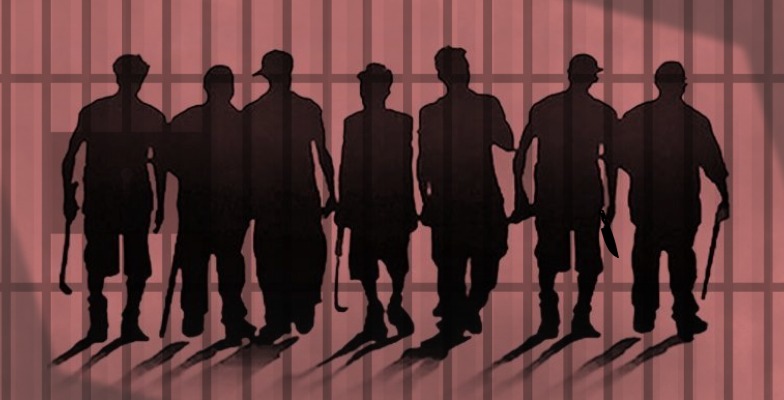
These groups have evolved from localized neighborhood disturbances into
sophisticated conduits for organized crime. The “Nine Star” and “Lara-Deel” factions
in Dhaka’s Uttara or the gangs operating in the Mohammadpur-Adabor area are not
merely symptoms of “delinquency”. They are the functional output of a political
economy where local “Big Brothers” and power-brokers utilize minors as disposable
muscle for extortion, drug peddling, and land grabbing. The brutality of these groups
reached a chilling zenith in April 2026 with the murder of 11-year-old Hossain in
Narayanganj. The reported motivation, that the six teenage perpetrators killed the child
simply to “experience jail”, unveils a terrifying moral void where the carceral state is
viewed not as a deterrent, but as a rite of passage.
The rise of these cases has placed the restorative spirit of the Children Act 2013 under
severe strain. There is an escalating, reactionary push from both the public and the
executive to adopt punitive, adult-style sentencing for minors involved in heinous
crimes. A return to retributive justice would dismantle a decade of human rights
progress.
However, the State’s inability to balance communal safety with restorative justice is
evident in the condition of Child Development Centers (Kishore Unnayan Kendra).
These facilities frequently function as overcrowded warehouses rather than sites of
rehabilitation. Without a robust investment in Probation Officers, the linchpin of the
2013 Act, and specialized legal aid, the “best interests of the child” remain a rhetorical
flourish rather than a judicial reality.
The protection deficit is further exacerbated by the intersection of economic
precariousness and climate-induced displacement. The Child Marriage Restraint Act
2017 continues to be undermined by the “special provisions” of Section 19, which
allow for the marriage of minors under the guise of their “best interest.” In reality, this provision functions as a survival strategy for displaced families, indicating that the
law is being forced to compensate for the State’s failure to provide economic and
environmental security.
Bangladesh must pivot toward a practice-based legal framework that emphasizes
substantive accountability over mere symbolic gestures. This shift requires a rigorous
commitment to demand the immediate operationalization of the Children Rules. The
current administrative inertia has deprived Child Affairs Police Officers (CAPOs) of
the necessary resources and specialized training required to conduct child-sensitive
policing, effectively stalling the juvenile justice mechanisms envisioned by the 2013
Act.
The State must prioritize a systemic investment in human capital to facilitate genuine
rehabilitation and prevention. This involves the urgent recruitment and
professionalization of social workers and probation officers who are equipped to lead
community-based diversion programs. By intervening with academic support, mental
health services, and vocational guidance before a child is absorbed into a gang
hierarchy, the justice system can transition from a reactive, carceral model to a
proactive, protective guardianship that honors its constitutional and international
obligations. For the youth of Bangladesh, the law must cease to be a distant parchment of
promises and become a functional, living shield.
Nafisa Binte Borhan is currently working as a legal associate at Amin &
Associates in Dhaka, Bangladesh. She is also a writer for JURIST News, reporting on
international legal developments.
