

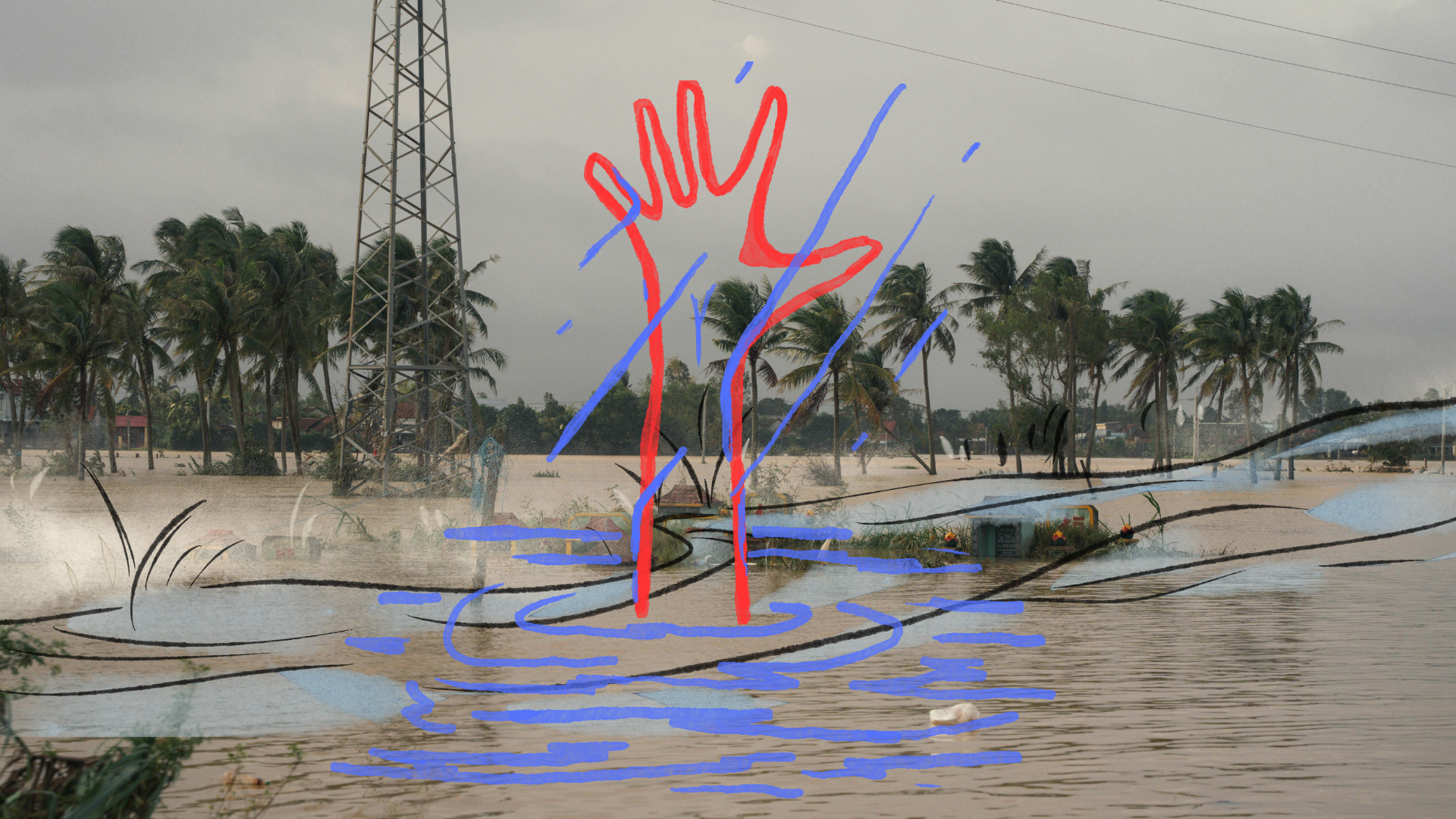
It’s dark, and the water just keeps coming. My roots are in Banskhali. It is our home, our soil, and right now, everything we love is sinking under the flood. The destruction is bleeding right into the neighboring towns too. My junior fellow and friend, Jawadur Rashid Wasee, just told me that only two inches are left before the water completely swallows his home in Anowara. Even trying to escape has turned deadly. Down in Cox’s Bazar, two teenage girls drowned during a rescue operation when their evacuation boat flipped upside down in the heavy currents. The body count is rising, Chittagong is dying, and I have to ask: what’s up, Bangladesh?
The Jaldi hills behind our homes are sliding down, burying families in the middle of the night. People say thirty are dead across the division, but everyone here knows the real number is much higher, hidden deep under the mud. Yet, when we turn on the TV, the news anchors in Dhaka are talking about traffic or politics, like our world isn’t drowning. Banskhali, a place known for its green salt farms and coastlines, is a living nightmare. The power went out days ago, phone batteries died, and families are sitting on tin roofs under a relentless downpour.
Mujtahid Hasan, a young CtgPost journalist and Port City International University fellow, has been uploading videos on Facebook, showing his last hope in our village getting shattered in the mud. He is living it, showing what it looks like when your home disappears. Before the networks died completely, we heard stories of mothers using thick ropes to tie their little kids to wooden ceiling beams so the currents won’t sweep them away while they sleep. It makes your chest hurt. They are trapped, hungry, and staring at the sky.
Our Facebook feeds are practically screaming with these videos. Local young think-tanks, journalists, and activists are desperately sharing clips showing the emergence of hands in these places, begging for rescue. One video in Banskhali shows a guy standing completely frozen, forced to just watch the corpse of his own father float by in the floodwater. Stand in the shoes of the sufferers if you want to know how calamities feel like.
As reported by The Daily Star (2026), the official death toll has passed thirty, but there is still no complete list of names because rescue work is ongoing. Still, local communities are slowly finding out who was lost. The Observer (2026) reported that in Cox’s Bazar, thirteen-year-old Hasnatul Jannat Jharna and her seven-year-old sister, Shawrin Moni, drowned when their rescue boat flipped in Chakaria.
Other areas saw similar losses. According to the Daily Sun (2026), flash floods in Banskhali swept two young boys, eleven-year-old Ashik and six-year-old Miraj, right out of their yards. They also noted that a three-year-old named Mostakim drowned in the heavy rains in Raozan, while thirty-five-year-old Abdul Alam and seventeen-year-old Md Sayeed were pulled under by the Sangu River in Satkania. Finally, Views Bangladesh (2026) reported that local journalists and activists are still trying to find and name victims in Chandanaish, Lohagara, and Patiya, where people are still buried under mud and collapsed walls.
What drives me crazy is how quiet the rest of Bangladesh is, filling your pockets and loading your mouthfuls while forgetting your responsibilities to the nation and the countrymen. Instead of endlessly spreading political narratives against one another seamlessly, it’s time we all come together hand in hand. My friends, juniors, and seniors from different student organizations and welfare societies are begging everyone to pay heed, to intellectually help Chittagong’s cries reach the capital. This isn’t just a local issue. This star-crossed repetition of the horrific 1991 Banskhali flood will drag the whole nation down because Chittagong is our port city, the business capital of Bangladesh.
It feels like a total betrayal, especially when you think about our history. Chittagong’s natives, the Sitaingas, have always been the most generous. Whenever a cyclone hit the coast or a flood hit the north, our ordinary people loaded up trucks with relief and were the first to arrive. We never waited for an invitation to help our brothers and sisters. Yet today, when our own backyard is underwater and our kids are starving on rooftops, the rest of the country is fast asleep.
Some army speedboats finally showed up today because help was desperately needed, but a few boats can’t save a million stranded people. This emergency demands immediate action on the field right now. We don’t want to hear about what the privileged mainstreams are facing while going to rescue the people, we want the people and places rescued. Chittagong always shared its umbrella when the rest of the country got wet, and now, Chittagong is crying. Wake up, listen to Wasee, Mujtahid, and our young activists, and help us before the whole nation drowns with us.
To whom it may concern: this isn’t a game, and it’s definitely not a casual friendly trip anymore. If you are heading out to these flooded zones just to show off on social media, or treat our worst nightmare like content, just stay home.
And to anyone handling relief money, I beg, “Do not steal the funds people trusted you with. Every single taka you pocket is a life pulled under the water.” Stop the endless finger-pointing and stop blaming each other for politics while the ground disappears beneath us. Let mother nature have her justice, but let us protect our people first. We need real, immediate action on the ground right now, not performances. Chittagong has given everything to this country; do not let it drown in your silence.
