

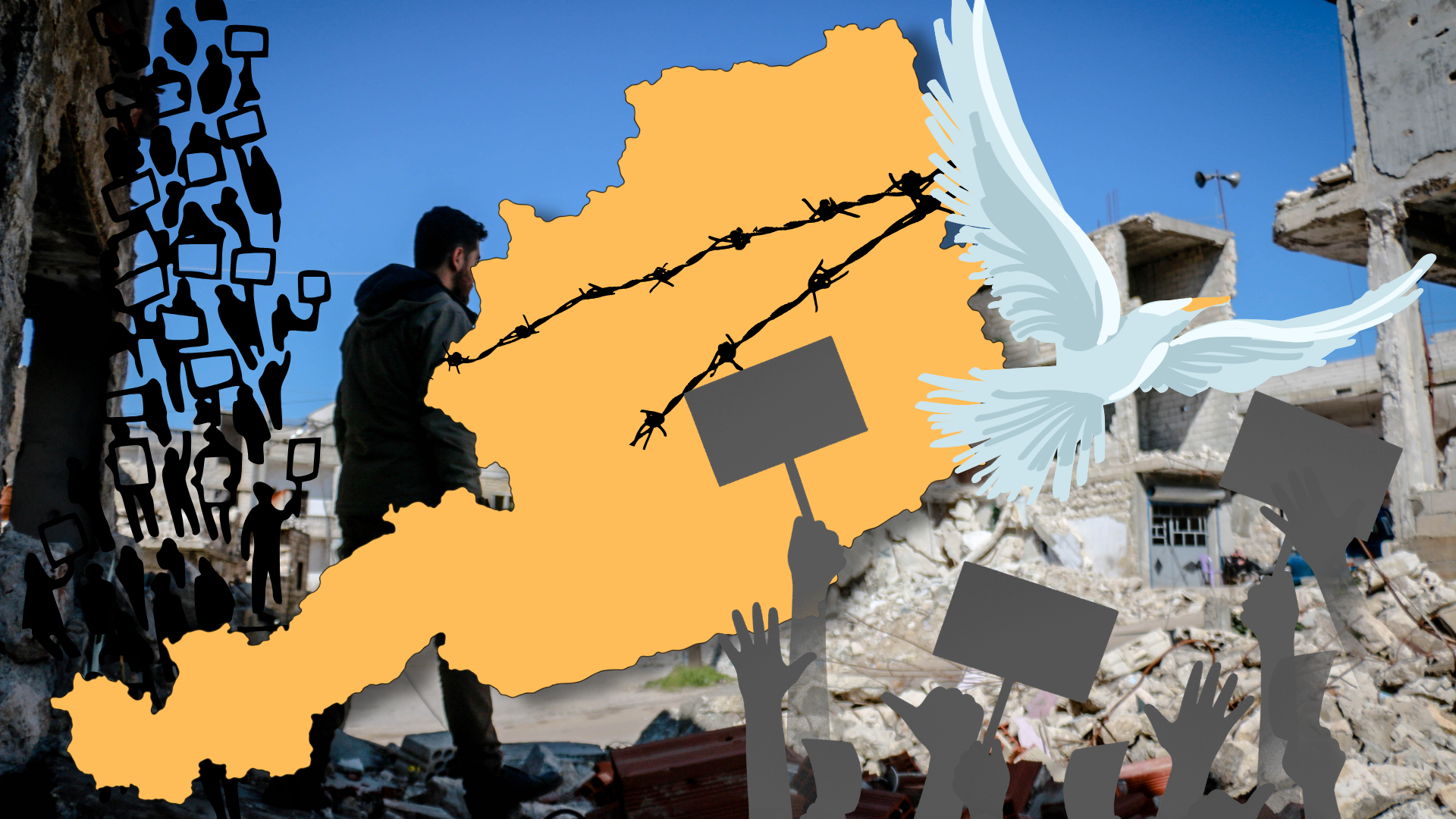
Mir Yar Baloch has done this before. In May 2025, amid the fever of Operation Sindoor, he announced the “Republic of Balochistan” on X and asked New Delhi for an embassy. Fourteen months on, in mid-July 2026, the same account made the same announcement — trended for roughly two days, drew the usual cluster of Indian accounts cheering it toward reality, then hit the wall it hit the first time. No foreign ministry moved. Pakistan didn’t even bother with a rebuttal, which is its own kind of statement: you don’t dignify a claim you don’t think anyone will act on.
That the ritual repeats itself so precisely is worth sitting with longer than the news cycle allows.
IR has two competing accounts of how a state comes into being, and they don’t agree on much. The declaratory theory, written into the 1933 Montevideo Convention, holds that a state exists the moment it has a population, a territory, a government, and the ability to deal with other states — recognition is paperwork, not birth. The constitutive theory flips this: nothing is a state until other states treat it as one. You can tick every Montevideo box and still be, functionally, nothing, if the world’s foreign ministries decline to answer your calls.
Balochistan clears neither bar, and not for the same reason each time. There’s no functioning government behind the declaration — no ministries, no treasury, nobody administering a single district, just a Twitter account issuing communiqués into the void. That fails Montevideo outright. And under the constitutive test the picture is even thinner: not one state has recognized it, India included, despite India being the only capital where the idea gets any airtime at all. Somaliland is the useful counterpoint — it has run its own currency and elections since 1991 without a single UN member acknowledging it exists, which is what decades of quiet state-building without recognition actually looks like. Balochistan skipped that groundwork entirely. The declaration arrived first, built on nothing, which is what makes it read less like a state being born and more like a message addressed to Delhi with Islamabad only cc’d.
India’s silence is the more interesting half of this story, because Delhi has every rhetorical reason to break it. An independent Balochistan would be the cleanest possible answer to decades of Pakistani support for militancy in Kashmir — the exact mirror thrown back across the same border. Modi gestured at Balochistan from the ramparts of the Red Fort back in 2016, and Indian news panels have kept the province in rotation as a talking point ever since.
Formal recognition still hasn’t come. Not through Operation Sindoor, not through this latest round, not through anything. The reason has less to do with Pakistan and more to do with what India would be conceding about itself. New Delhi governs a restive Kashmir, watches Khalistani sentiment resurfaces every few years in Punjab and the diaspora and knows exactly what precedent it would be setting by endorsing a province’s right to secede by unilateral declaration. Recognizing Balochistan means handing Islamabad a script it can read back verbatim at the UN. So Delhi does the thing status-quo powers reliably do with a neighbor’s chaos: let sympathetic voices amplify it from the sidelines, keep the state itself legally mute.
There’s a third actor in this that most of the coverage skips past, and it isn’t Pakistan or India. Balochistan is where Gwadar port sits — the terminus of the China-Pakistan Economic Corridor, and for years now the recurring target of Baloch Liberation Army attacks on Chinese personnel and infrastructure. An unstable or seceding Balochistan isn’t mainly a wound to Pakistani pride. It’s a threat to the one land-and-sea route Beijing has to the Arabian Sea that doesn’t run through the Malacca Strait, where half its trade could theoretically be choked by someone else’s navy.
Told as a self-determination story, this is a people whose 1947 independence under the Khanate of Kalat was reversed by force in 1948, still pressing the same claim eight decades later — real grievance, real history, nothing manufactured about it. Told as great-power friction, the same insurgency looks less like a movement heading toward resolution and more like a pressure point that outside actors have quiet incentive to keep simmering, since an unresolved conflict ties down Pakistani and Chinese attention at essentially no cost to anyone else. Neither reading cancels the other out.
Pakistani sovereignty over Balochistan hasn’t shifted an inch. The province is still under constitutional administration from Islamabad, still garrisoned, still the site of counterinsurgency operations against the BLA and the smaller groups aligned with it. What has changed is narrower: these declarations keep getting louder and more frequent, each one landing a little more normalized than the last, less a bid for statehood than a recurring beat in the India-Pakistan information war. Mir Yar Baloch isn’t building a republic. He’s building a hashtag with institutional memory — and that, even without a single flag raised over a single ministry, does something real. It keeps Quetta and Panjgur in headlines that would otherwise have no reason to mention them.
What gets lost in the noise is that the grievance underneath the theater isn’t theater. Pakistani human rights groups, not just the diaspora, have documented enforced disappearances in the province for years. Balochistan remains the poorest province in the country by most measures, sitting on gas and mineral reserves that Islamabad has extracted for decades while conceding almost nothing in return — which is precisely why devolution, let alone independence, has never seriously been on the table. A declaration can fail every test of statehood without discrediting the record of abuse that produced it, and a legitimate grievance doesn’t retroactively make a premature claim to sovereignty real. Somewhere in Panjgur tonight, that distinction won’t matter to anyone.
Mahmud Newaz Joy is a contributor at Muktipotro.
