

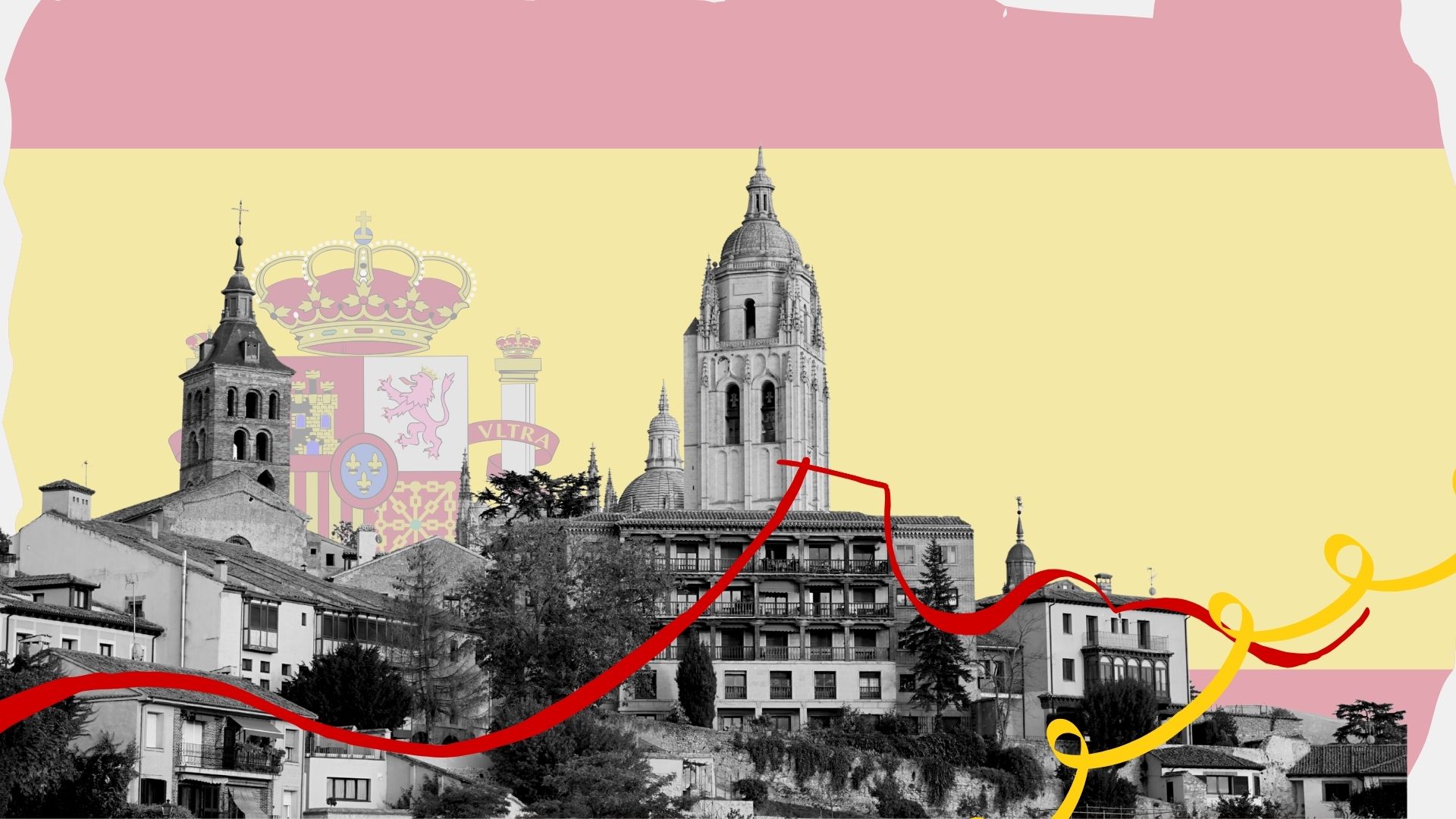
When Spain celebrates a major victory on the global sports stage, the world sees more than just athletic talent. It looks at a country that appears to be a shining model of modern, progressive values. For anyone looking at the political landscape, Spain represents what the modern left can achieve at its best: universal healthcare, strong protections for reproductive rights, advanced gender equality laws, and accessible public education. Compared to conservative or right-wing models that frequently cut public spending and roll back personal freedoms, this social-democratic vision is incredibly appealing. It proves that a government can actively choose to invest in the well-being and personal dignity of its people.
However, even the most successful political systems have internal contradictions. While the progressive left has delivered life-changing benefits to its citizens, it simultaneously operates within a global economic framework that limits how far it can go. Behind the scenes of this progressive success story lies a complicated reality where housing costs soar, youth unemployment remains high, and borders are tightly controlled.
This tension does not mean the left has abandoned its values out of malice. Rather, the modern social-democratic model faces a structural trap. To maintain a high-quality, expensive social safety net for the majority of its citizens, it often relies on compromises: using highly visible social victories to balance out market-friendly economic policies and protecting the internal welfare system by keeping vulnerable outsiders, like migrants and undocumented workers, at the margins.
To understand why modern progressive governments face these economic dilemmas, it helps to look at how the Western left has changed over the last century. Critics often accuse left-wing parties of suddenly turning their backs on the working class, but history shows a gradual evolution driven by global changes.
The structural evolution of the mainstream political left over the past century represents a profound ideological mutation that ultimately surrendered the capacity for genuine economic redistribution to the dictates of global capital. Beginning in the 1920s with an explicitly socialist agenda centered on public ownership and dismantling capitalist exploitation—championed by parties like the German SPD and Swedish SAP—progressive movements underwent a major shift by the 1960s, retreating into a technocratic, “economistic” framework dedicated to merely managing the mixed economy via Keynesian tools. This shift paved the way for a more radical concession by the 1990s: the embrace of a neoliberalized, “Third Way” leftism. By adopting market liberalization, prioritizing white-collar and business-friendly constituencies, and treating global financial forces as untamable, modern social-democratic parties—such as those in Spain—effectively stripped themselves of their foundational redistributive leverage. To sustain their progressive credentials and preserve domestic status-quo stability in the absence of genuine economic power, contemporary center-left parties increasingly rely on two symbiotic mechanisms: a “Progressive Mirage” that leverages high-visibility, low-cost social victories to deflect from systemic economic compromises, and a “Border Rationing Matrix” that violently excludes a racialized, undocumented exterior to jealously shield the remaining privileges of the internal welfare interior.
In political history, mainstream left-party platforms have undergone two major transformations. Back in the 1920s, European left-wing movements were openly socialist. Their official programs focused on challenging the capitalist system itself, demanding public ownership of major industries and a complete reordering of the economy to protect workers from exploitation. By the 1960s, this approach changed into what scholars call an economic or “Keynesian” model. The goal was no longer to replace capitalism, but to manage it through government regulation, using steady economic growth to fund public services and aim for full employment. Mudge (2018) argued that the rise of the “economist theoretician” established a powerful, non-inevitable connection between professional economics and left-wing politics that came to define the post-1930s era (pp. 111).
The most decisive shift, however, happened between the 1960s and the 1990s. Facing a rapidly globalizing world, mainstream left parties across the West began adopting what became known as “Third Way” politics. As political platforms from this era show, progressive parties increasingly accepted global market forces as something they could not fully control. They began embracing privatization, deregulation, and market-friendly reforms. Instead of focusing entirely on absolute economic security for the traditional blue-collar working class, they shifted their focus toward white-collar professionals and building a flexible, work-centered welfare state.
Because the left accepted the reality of global capitalism, its ability to radically redistribute wealth was drastically reduced. When a government cannot easily restructure the economy to close the wealth gap, it has to find other ways to express its progressive identity. This historical backdrop explains why modern left-leaning governments often achieve incredible progress in social rights while struggling to solve deep, structural economic issues.
This historical evolution created a pattern where highly visible social freedoms can inadvertently act as a shield for economic concessions. Progressive governments deserve immense credit for passing laws that protect bodily autonomy, legal abortion, and equal rights. These are vital human rights that directly improve millions of lives, and they represent a massive victory over conservative platforms that try to restrict personal freedoms. Historical shifts show that “before the 1860s ‘left’ parties were radical and liberal, not socialist,” but they transformed as socialist leaders began agitating for their worldview within liberal educational and political venues (Mudge, 2018, p. 70).
The structural reality, however, is that passing a socially progressive law requires legislative change rather than a massive redistribution of tax money or corporate wealth. It costs a government very little financial capital to guarantee reproductive freedom or marriage equality. In contrast, tackling a housing crisis, taking on powerful real estate speculation, or lowering structural unemployment requires confronting major economic interests and defying global market logic.
This dynamic creates a visible split screen in modern social democracies. On one side, you see a progressive utopia championing human rights and individual liberty. On the other side, the domestic working class continues to be squeezed by inflation, precarious gig-economy jobs, and an unforgiving housing market. The danger is that centrist-left parties can lean heavily on their genuine social achievements to maintain their progressive branding, using these victories to deflect from the fact that they have quietly accepted mainstream, market-friendly economic policies that allow the wealth gap to grow. Celebrating social progress is necessary, but it should not become a moral distraction from a government’s failure to solve basic, macroeconomic inequality.
When a country commits to providing top-tier public goods like free education and universal healthcare within a market-friendly economic framework, it encounters a major financial problem. These systems are incredibly expensive to run. Because the government cannot tax global corporations or mobile capital too heavily without risking capital flight, the money to fund the welfare state has to be carefully managed.
This reality creates a difficult dilemma: the survival of an inclusive, egalitarian system for insiders often requires the exclusion of outsiders. The modern welfare state functions much like an exclusive club. The perks inside the club are fantastic, but to keep those perks free and high-quality for the members, the gatekeepers have to strictly control the guest list.
This is where the ideal image of a progressive vanguard collides with the structural reality of national borders. Historically, the same state that guarantees comprehensive public goods to its citizens has kept seasonal agricultural laborers and undocumented communities—whose grueling, low-wage work props up the tourism and farming sectors—at the margins of the welfare interior. As reported by The Guardian (2026), Spain has launched a landmark scheme allowing hundreds of thousands of these undocumented migrants to regularize their legal status. Yet, while this policy represents a significant humanitarian step forward, it simultaneously illuminates the very contradiction at the heart of the social democracy: it underscores a long-standing systemic friction where a progressive paradise has fundamentally relied on an excluded economic exterior to sustain itself. This exclusion is not driven by hatred or right-wing prejudice; it is a structural feature of the modern welfare architecture. If a social democracy instantly expanded its circle of universal care to include every displaced person or migrant worker within its economic reach, the financial strain would destabilize the system under its current market constraints. To preserve stability and comfort for the domestic majority, the system inherently leaves the most vulnerable people at the margins. Examining these contradictions is not about dismissing the left or claiming that conservative alternatives are better. Rather, this critique is an honest look at the systemic traps that well-meaning progressive governments fall into when they try to operate within a global capitalist framework.
True equality cannot be achieved by using social progress as a shield to hide economic inequality, nor can it be sustained by drawing a hard line between citizens who deserve care and migrants who do not. Understanding how the left transformed over the decades helps us see that these flaws are built into the structure of the modern state. For progressive politics to truly live up to its promise, it must move past simple branding and confront the deeper, structural economic realities that keep true equity just out of reach for the people who need it most.
Reference
Mudge, S. L. (2018). Leftism reinvented: Western parties from socialism to neoliberalism. Harvard University Press.
The Guardian. (2026, June 30). Spain to allow up to 1m undocumented migrants to regularise status under new scheme. https://www.theguardian.com/world/2026/jun/30/million-migrants-spain-apply-regularise-status-new-scheme
Jannat Binte Aslam is an economics student at North South University
