

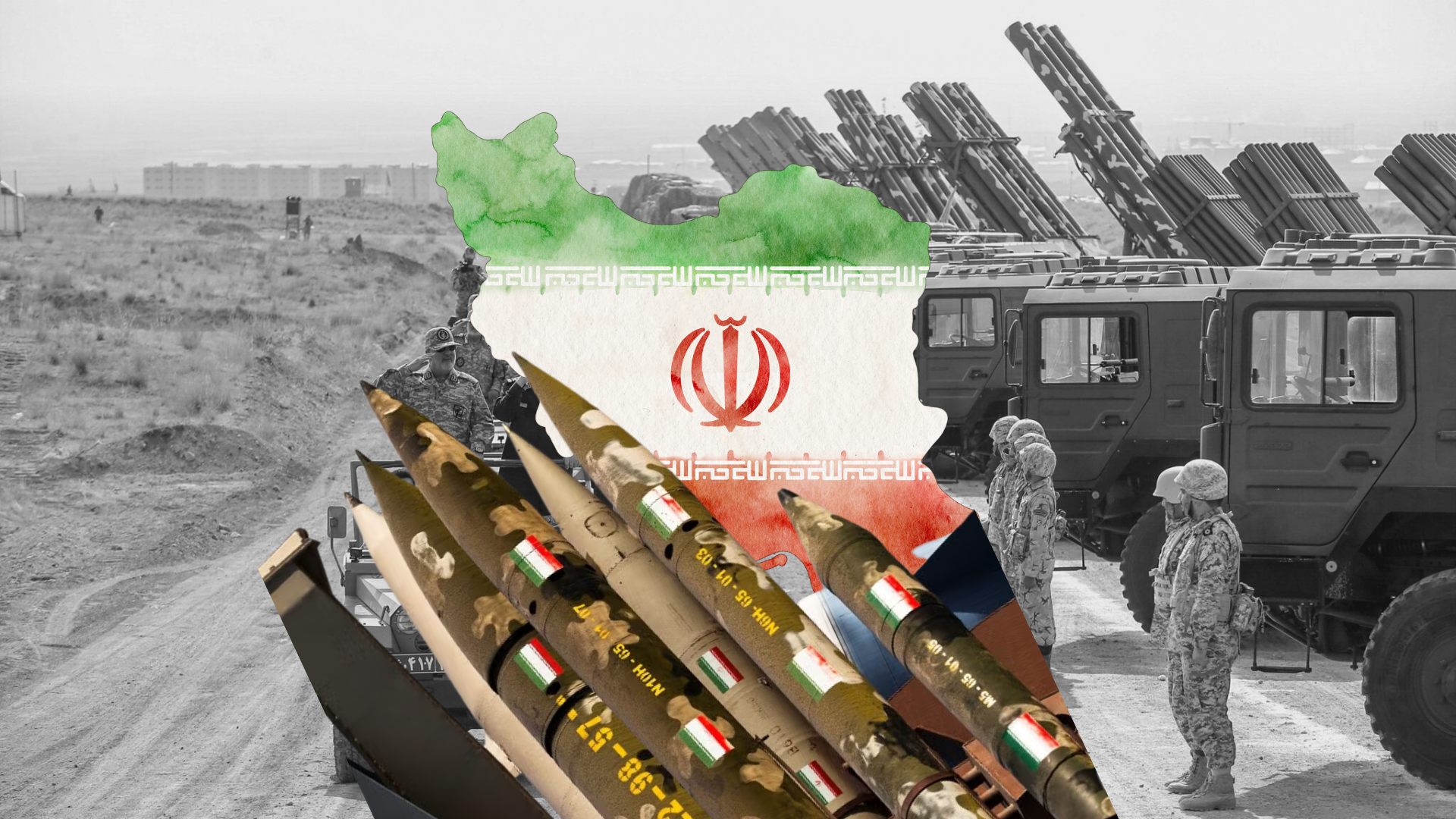
The Iran-Israel conflict is something that has garnered international attention at all tiers. Israel’s precise attacks on Iran have shown one crucial aspect, i.e. Israel’s ability to penetrate deep into Iranian aerospace and conduct airstrikes unabated, though we have seen that after the initial attacks, Iranian air defence had been revitalised and some F-35s were downed. Nevertheless, the very fact that this attack came as a surprise to Iran and culminated in the elimination of its military and military-industrial complex’s top brass is indeed proof of Iranian Intelligence failure and thus is one of the highest forms of complacency shown by a nation constantly at risk of external threats.
Moving on, Iran still virtually lacks a proper air force. Let’s just be honest with ourselves, Iran has very few old F-14 Tomcats that the Americans have retired from service. So, Iran has virtually no aerial deterrence except for the SAM (Surface to Air Missile) systems. This is very risky, since aerial interception is a crucial part of a nation’s aerial deterrence strategy if that nation doesn’t actively seek air superiority but seeks aerial contest in its aerospace, similar to Iran. It’s quite a broad topic, I am making it as brief as possible. This lack is also a huge loophole in Iran’s defence strategy, something for which Iran is constantly paying.
Now the question comes. What could Iran do more?
There are several dimensions to answering this question. However, Iran hasn’t pursued an active diplomatic venture to supplement its military-industrial complex and its unique strategic conundrum. It is fairly true. We have seen the offset of the recent India-Pakistan conflict and have seen how the PAF, with the help of China, held an edge over the IAF despite the IAF having a qualitative edge with the induction of Rafales. Without China, it would have been impossible because China helped Pakistan build an indigenous cohesive system, establishing an aerial kill chain as reported by some defence analysts, which took the multiple-origin, uncoordinated IAF by surprise.
The entire thing was possible due to Pakistan’s strategic ties with China, forging not only verbal brotherhood but also intertwining the two via their shared strategic interests. A strategic relationship encompassing defence is something Iran lacks and should have pursued aggressively with both Russia and China. Very recently, an agreement between Russia and Iran, initially containing clauses of mutual defence, was later modified due to Iranian moderates’ concerns that it would jeopardise negotiations with the US and Israel. What has happened now? Has that borne any fruit?
No, Iran could have made strategic ties with China, given its important position in the Strait of Hormuz and Gulf of Persia and could have given it access to ports, but rather gave the Indian Adani Group authority to run the Chabahar port, creating a security crisis (influx of spies). These are grave strategic miscalculations, whose price has been paid or will be paid.
Diplomacy is as important as indigenous military industrial development, and Iran hasn’t really put itself up to that level in which it could enter into joint ventures with China to develop aircraft similar to what the China-Pak JF-17 program entails. True self-sufficiency can only be achieved after industrial maturity and technological self-sufficiency. Iran has failed to understand this entirely.
I personally applaud the Iranian regime’s efforts to develop an indigenous military-industrial complex, but there’s so much room for improvement and shared collaboration, and Iran should now not only focus on strategic aspects (Ballistic missiles, hypersonic missiles) but also on existing symmetric solutions, including high-end aircraft and other platforms.
Sifat Ahmed, Staff writer, Motus News, USA
