

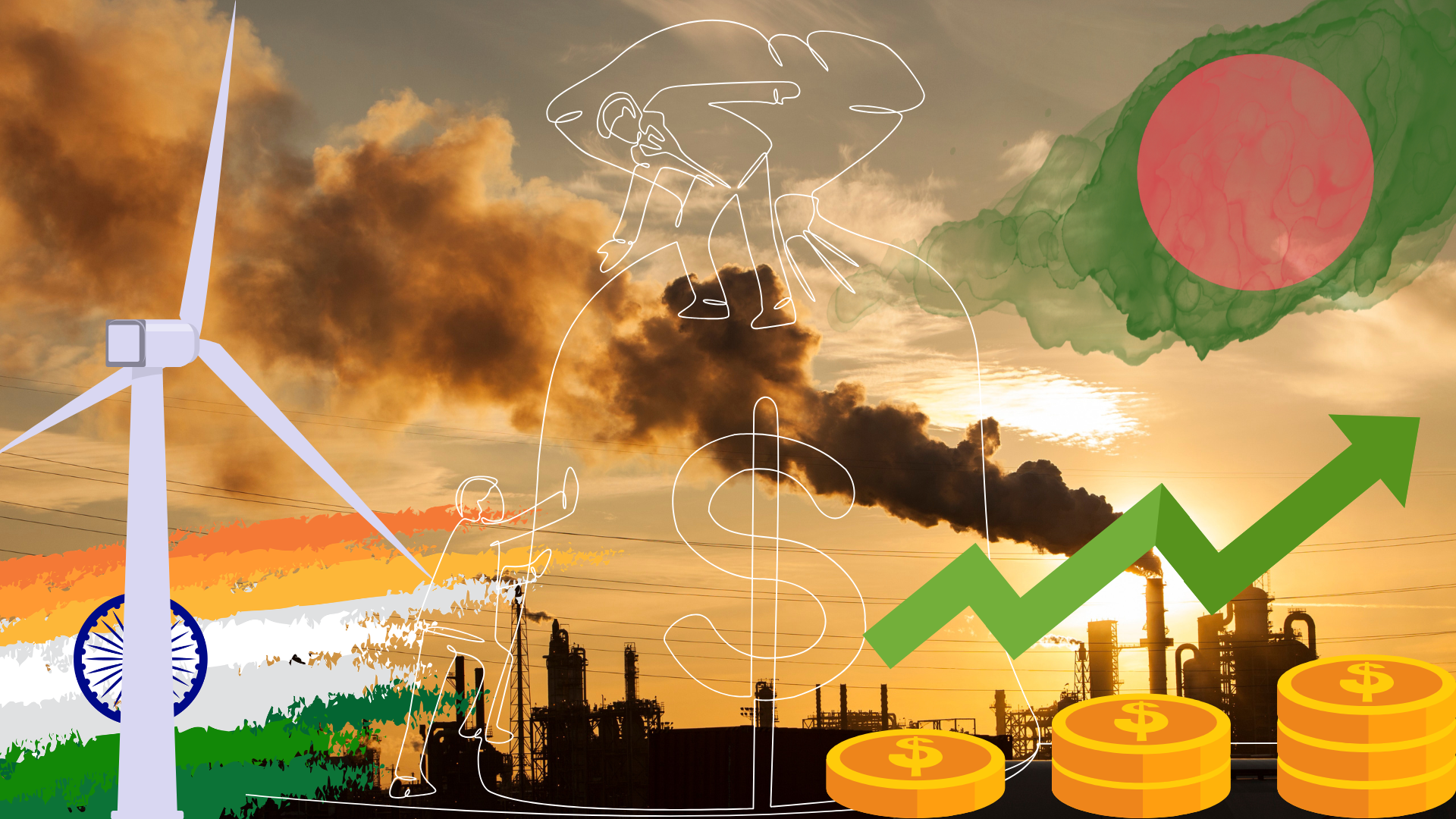
As of March 13, 2026, the global international order has definitively pivoted away from the rules-based consensus of the post-1945 era toward a fragmented landscape defined by raw capability and localized bulwarks. The 62nd Munich Security Conference, held just weeks ago, functioned as a formal autopsy for multilateralism, ushering in an epoch where shared norms are viewed as strategic encumbrances rather than assets. This shift, termed the “Law of the Jungle,” has found its most acute expression in the global energy market, which has transitioned from a commercial exchange into a primary theater of kinetic and economic warfare.
The catalyst for this systemic rupture was the initiation of joint military strikes by the United States and Israel against Iranian energy and military infrastructure on February 28, 2026. In the subsequent fortnight, Brent crude prices surged past the psychological $100 barrier, reaching peaks of $119.50 as the Strait of Hormuz, the world’s most critical energy point, was effectively closed to Western-aligned shipping. While 95 countries have already reported sharp increases in retail fuel prices, triggering inflationary spirals and social unrest across the Global South, Bangladesh has emerged as a singular anomaly.
In Dhaka, the lights remain on, and domestic fuel prices have been held steady despite a global risk premium that has added $20 to $40 to the price of every barrel. This insulation is not a result of market isolation but the product of a sophisticated and unyielding new doctrine: Transactional Realism. Under the current administration, Bangladesh has moved away from the “passive neutrality” of the past toward a high-stakes strategy that leverages its status as a “Geopolitical Swing State” to secure national survival.
The Strait of Hormuz handles approximately 20 million barrels of oil per day and 20% of the world’s liquefied natural gas (LNG) trade. Following the Feb 28 strikes, which targeted Iranian oil depots and killed high-ranking officials including the Supreme Leader, Iran responded by mining the waterway and threatening any vessel attempting transit without Tehran’s explicit approval. The market is currently pricing in the total loss of 7–11 million barrels per day of crude. While the International Energy Agency (IEA) has proposed a record-breaking release of 400 million barrels from strategic reserves, this intervention is viewed as a temporary palliative rather than a structural solution.
The “Law of the Jungle” identified at the 2026 Munich Summit suggests that major powers, the US, China, and Russia, now treat foreign policy as a series of price-based exchanges rather than ideological commitments. Alliances have become contracts, where reciprocity is conditional and revocable. In this environment, middle powers are no longer “client states” but “traders” balancing a global ledger of assets and liabilities.
Bangladesh’s adoption of this doctrine is evident in its refusal to be forced into a binary choice between the Western security axis and the emerging Sino-Russian energy orbit. Instead, Dhaka is practicing “Active Arbitrage,” extracting concessions from each power by leveraging its strategic proximity and the “Scale Trap” of its industrial base.
While the current administration’s “Transactional Realism” has successfully deferred an immediate economic collapse, I believe we must cast a skeptical eye on the long-term sustainability of this “Multi-Alignment” strategy. In my view, playing the US, Russia, and Iran against one another is akin to balancing on a razor’s edge; it works only as long as the superpowers are distracted.
The most significant achievement of the current administration is the “Hormuz Exception.” While global shipping giants like Maersk have halted transits, Bangladesh-flagged vessels continue to navigate the Persian Gulf. This was not a product of luck but a masterclass in “Direct-Access Diplomacy.”
On March 9, 2026, Energy Minister Iqbal Hasan Mahmud Tuku met with Iranian Ambassador Jalil Rahimi Jahanabadi. In a world where the US Navy’s presence in the Gulf is viewed as a provocation by Tehran, Bangladesh negotiated a separate peace.
The agreement requires Bangladesh to provide “advance notification” to Iranian authorities before its tankers enter the Strait. By agreeing to this verification system, Dhaka has effectively decoupled its energy security from the US-Israel military coalition. This “Direct Coordination” protocol allows Bangladesh to import oil from Iraq, Saudi Arabia, and the UAE, nations that have otherwise cut production due to shipping risks, because its tankers are granted safe passage while others face drone strikes and missile attacks.
I argue that while this is a tactical masterpiece, it carries a hidden “reputational tax.” By negotiating separate peace deals with Tehran, we risk being perceived in Washington not as a “Necessary Neutral,” but as a wildcard that cannot be trusted in a crisis. Furthermore, I am concerned that the “Amir Khasru Ask,” for Russian oil waivers, relies too heavily on the “Indian Precedent.” Bangladesh does not yet possess India’s massive market gravity, and I fear that if we overplay our hand, the “Law of the Jungle” will eventually turn its wrecking ball toward Dhaka’s industrial base.
This arrangement represents the first-order success of Transactional Realism. Dhaka recognized that Iran’s blockade was a reaction to Western “securitization” of the Gulf. By treating Tehran as a legitimate, if aggressive, regional stakeholder and negotiating on a sovereign basis, Bangladesh bypassed the blockade that has paralyzed even G20 nations.
The second pillar of the strategy is direct engagement with Washington. In the “Trump 2.0” era, US policy is governed by “Hard Sovereignty” and the aggressive use of “Secondary Tariffs”. Finance Minister Amir Khasru Mahmud Chowdhury’s recent engagement with US Ambassador Brent Christensen is a bold attempt to redefine the US-Bangladesh relationship.
Minister Khasru has formally requested a temporary US waiver to import Russian fuel, explicitly citing the precedent set by India. India managed to grow its economy on discounted Russian Urals for years, and even under Trump’s hardened sanctions regime, it secured a 30-day “stranded cargo” waiver in early March 2026.
My verdict is this: The government has won the battle for fuel, but they are far from winning the war for stability. Without a rapid move to diversify our energy mix away from fossil fuel geopolitics entirely, we are simply leasing our sovereignty one oil tanker at a time. We must use this “breathing room” to reform our fragile financial institutions, or these diplomatic wins will merely be a footnote in a future economic crisis.
The ultimate beneficiary of this “Survivalist Excellence” is the Ready-Made Garment (RMG) sector, which accounts for over 80% of Bangladesh’s export earnings. By stabilizing fuel prices and ensuring an uninterrupted energy supply through the “Hormuz Exception,” the government has shielded the industrial backbone from the catastrophic overhead surges seen in rival markets. For the average citizen, this transactional diplomacy is what prevents mass layoffs and maintains the purchasing power of the RMG workforce.
The Crisis of Narrative Dominance
On the other side of the ledger, I find a dangerous disconnect. While the state is playing “4D Chess” with Washington and Tehran, our domestic political class remains trapped in the “Politics of the Past.” Online activists are consumed by debates over presidential roles and party speeches, matters that are irrelevant in the face of a $119 oil barrel. This is a profound failure of Agenda Setting. In an age of “Algorithmic Sovereignty,” a political movement that cannot offer a comparative analysis of the “Bay of Bengal Pivot” is strategically illiterate. The government is winning the war for fuel; the opposition is losing the war for the public’s imagination because they have no “Foreign policy” of their own.
To be a “Government in Waiting,” the opposition must stop reacting to provocations and start offering a comparative analysis of how they would manage the “Bay of Bengal Pivot”. The state is winning the war for fuel but losing the war for the public’s imagination.
Bangladesh’s current strategy is a refinement of Vietnam’s “Bamboo Diplomacy”, flexible branches but firm roots. Vietnam maintains a “Comprehensive Strategic Partnership” with the US while remaining Russia’s top defense partner and showing deference to China on critical junctures.
The current foreign policy of Bangladesh is not a matter of “blind praise”, it is a matter of “Survivalist Excellence.” By holding fuel prices steady through the most volatile quarter in a decade, the government has prioritized social stability over ideological purity.
Transactional Realism is the New Standard: Bangladesh has successfully transitioned from a “client state” to a “Geopolitical Swing State,” leveraging its leverage over Tehran, Washington, and New Delhi.
Sovereignty of the Switchboard: The ability to bypass the Hormuz blockade through direct negotiation with Iran is a landmark achievement in bilateral pragmatism.
The Scale Trap as a Shield: Bangladesh’s industrial importance ensures it can demand oil waivers and concessions that smaller or less integrated nations cannot.
Institutional Debt as the Final Frontier: While the foreign policy is winning, the domestic financial system remains fragile. The “real value” of the current strategy is the breathing room it provides for the long-term dismantling of the oligarchic economic order.
As Bangladesh looks toward 2030, the path is clear: Foreign policy can no longer be a department of “goodwill.” It must be a department of “Leverage.” Whether we are talking to Trump’s Washington or a post-Khamenei Tehran, the goal remains the same: ensuring that the “Bangladesh Interest” is the only alignment that matters. The state has successfully navigated the “Law of the Jungle” in 2026; its next challenge is to dominate the narrative and ensure that the public understands the high-stakes game being played on their behalf.
