

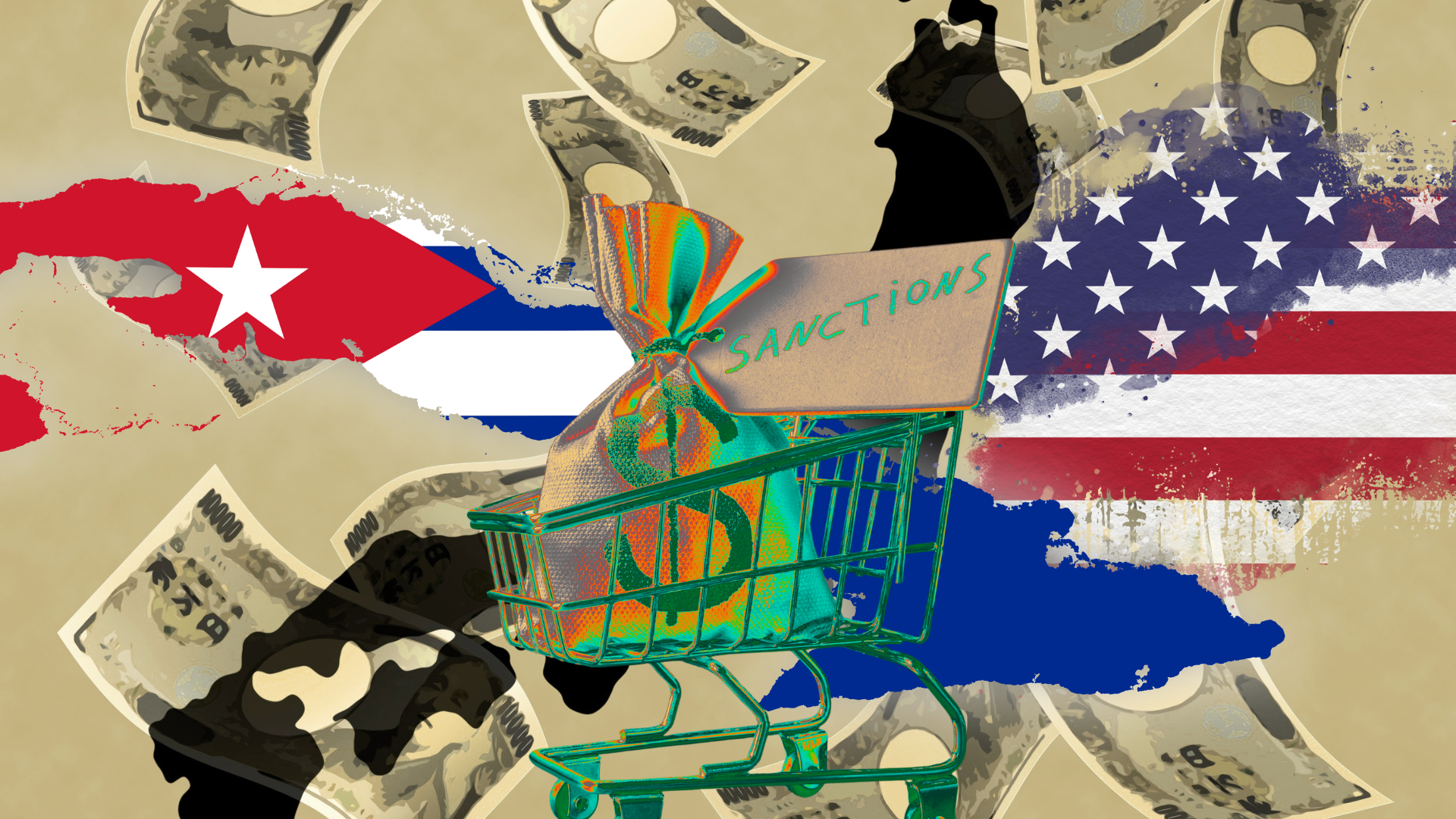
Economic sanctions are one of the most widely used tools of foreign policy in modern international relations. They are often presented as a “middle path” between diplomacy and military intervention—coercive enough to pressure governments, yet less destructive than war. But a fundamental question continues to divide scholars and policymakers: do economic sanctions actually lead to regime change? The long and complex history of United States policy toward Cuba offers one of the most important case studies to explore this question.
The United States first imposed comprehensive economic sanctions on Cuba in the early 1960s, following the revolutionary government led by Fidel Castro and the alignment of Cuba with the Soviet Union during the Cold War. What began as a strategic response to geopolitical rivalry gradually evolved into one of the longest-running sanctions regimes in modern history. Over six decades later, the Cuban government remains in power, raising serious doubts about the effectiveness of sanctions as a tool for regime change.
At its core, the logic behind economic sanctions is straightforward. By restricting trade, investment, financial transactions, and access to global markets, sanctions aim to weaken a target country’s economy. This economic pressure is expected to create internal dissatisfaction, leading either to popular uprisings or elite defections that ultimately force political change. In theory, sanctions target the state; in practice, however, they often affect society at large.
The Cuban case reveals the limits of this logic. Despite decades of economic hardship exacerbated by US sanctions, the Cuban political system has demonstrated remarkable resilience. Leadership transitions—from Fidel Castro to Raúl Castro, and later to Miguel Díaz-Canel—have occurred without fundamental changes to the governing structure. This continuity suggests that sanctions alone have not been sufficient to produce regime change.
One reason for this outcome lies in the nature of political control within Cuba. The state maintains a strong grip over key institutions, including the military, media, and major sectors of the economy. In such contexts, economic pressure does not easily translate into political mobilization. Instead, governments can often shift the burden of sanctions onto the population while preserving their own power. In Cuba, the leadership has consistently framed US sanctions as an external threat, using them to justify economic difficulties and rally nationalist sentiment.
This dynamic highlights an important paradox: sanctions intended to weaken a regime can sometimes strengthen it. By creating a sense of external hostility, they enable governments to consolidate internal unity and suppress dissent. In Cuba, the narrative of resistance against US intervention has been a central pillar of political legitimacy since the Cold War. Rather than triggering widespread rebellion, sanctions have often reinforced this narrative.
Another key factor is the role of international support. While the United States has maintained a strict embargo, Cuba has not been entirely isolated. During the Cold War, the Soviet Union provided substantial economic assistance. In the post-Soviet era, other countries—such as Venezuela and, at times, China—have offered varying degrees of support. This external backing has helped Cuba mitigate some of the economic impact of sanctions, reducing their effectiveness as a tool of coercion.
Moreover, the design of sanctions themselves matters. Comprehensive sanctions, like those imposed on Cuba, tend to have broad and often unintended consequences. Instead of targeting specific political elites, they disrupt entire economies, leading to shortages of food, medicine, and energy. This raises serious ethical concerns. Critics argue that such measures disproportionately harm ordinary citizens while leaving ruling elites relatively insulated. In Cuba, recurring economic crises, power shortages, and limited access to basic goods have affected daily life for millions, yet these hardships have not translated into decisive political change.
Empirical research in international relations supports this observation. Studies have shown that sanctions rarely achieve their most ambitious goals, such as regime change. While they may succeed in signaling disapproval or imposing economic costs, their ability to alter deeply entrenched political systems is limited. Authoritarian regimes, in particular, tend to be more resilient under sanctions, as they possess stronger mechanisms of control and repression.
The Cuban case also illustrates the importance of domestic political structures. In more open or democratic societies, economic hardship may lead to electoral change or mass protests. In contrast, in tightly controlled political environments, opportunities for organized opposition are limited. Without viable channels for political expression, public dissatisfaction does not easily translate into regime change.
However, it would be overly simplistic to conclude that sanctions have no impact at all. In Cuba, they have undoubtedly shaped economic conditions and influenced policy decisions at various points. For instance, periods of economic crisis have prompted limited reforms, such as the expansion of small-scale private enterprise or adjustments in state policies. Yet these changes have been incremental rather than transformative, falling short of the regime change envisioned by US policymakers.
The persistence of US sanctions on Cuba also reflects domestic political considerations within the United States. Policies toward Cuba have often been influenced by electoral dynamics, particularly the preferences of Cuban-American communities in key states like Florida. As a result, sanctions have endured not only as a foreign policy tool but also as a feature of domestic political strategy. This further complicates the question of effectiveness, as the goals of sanctions may extend beyond regime change to include signaling, deterrence, or political positioning.
In recent years, there have been moments of partial rapprochement, most notably during the Obama administration, which sought to normalize relations with Cuba through diplomacy and engagement rather than isolation. These efforts suggested an alternative approach: that opening channels of communication and economic interaction might be more effective in encouraging gradual change. However, subsequent policy reversals have reintroduced uncertainty into US-Cuba relations.
Ultimately, the Cuban case challenges the assumption that economic pressure alone can bring about regime change. More than six decades of sanctions have failed to achieve this objective, highlighting the limitations of coercive economic measures in the absence of broader political and social dynamics. Sanctions may weaken economies, but they do not automatically dismantle political systems—especially those with strong internal control, external support, and a capacity to adapt.
The broader implication for international relations is clear. Economic sanctions are a blunt instrument. They can impose costs, signal disapproval, and sometimes influence behavior at the margins. But when it comes to the ambitious goal of regime change, their track record is mixed at best. The case of US policy toward Cuba serves as a powerful reminder that political transformation is rarely driven by external pressure alone. It is shaped by a complex interplay of domestic institutions, leadership strategies, international alliances, and historical context.
In answering the central question—do economic sanctions lead to regime change?—the evidence from Cuba suggests a cautious conclusion: they rarely do, and in some cases, they may even entrench the very regimes they are intended to weaken.
