

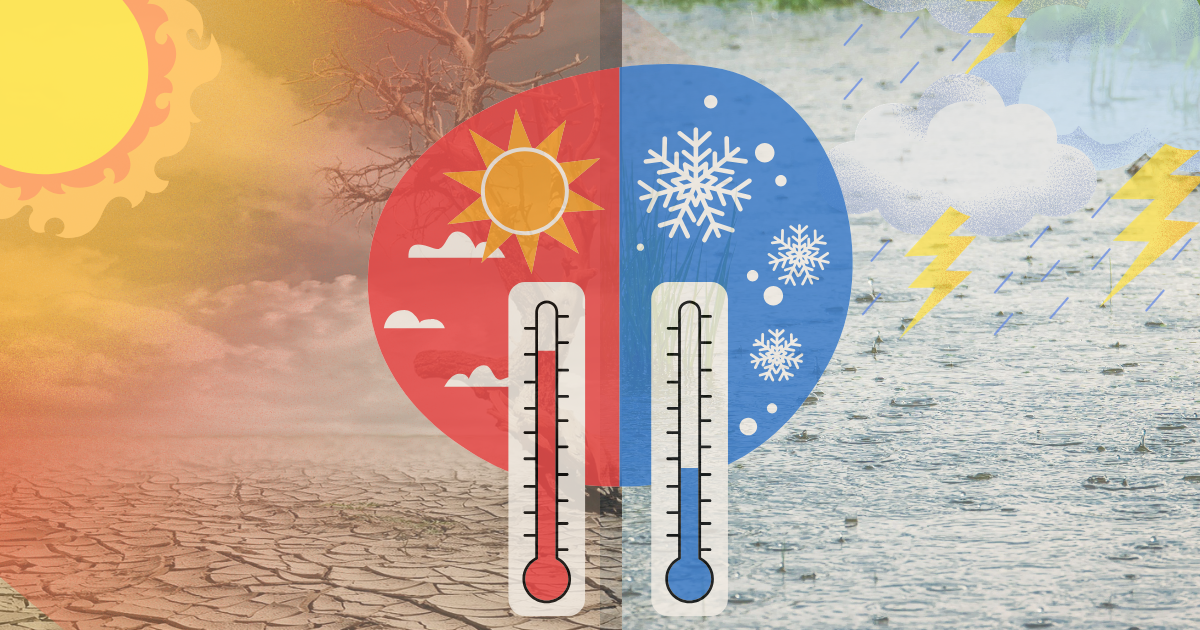
The climate’s unpredictable and often hostile behavior has repeatedly threatened human life. One of nature’s most destructive and capricious phenomena is El Niño. Now climate scientists warn a potentially record‑breaking El Niño is building in the tropical Pacific and could bring unusually severe global impacts.
Forecasters at leading centers, including NOAA and the European Centre for Medium‑Range Weather Forecasts, now assign high odds that El Niño will develop later this year and strengthen through the autumn and winter of 2026–27. Several models project sea‑surface anomalies in the Niño 3.4 region well above the 1.5 °C threshold that defines a strong event; some analysts describe conditions as consistent with a “Super El Niño” if anomalies exceed about 2 °C.
El Niño is a recurring climate pattern that begins when large areas of the tropical Pacific Ocean become substantially warmer than normal. That extra heat alters atmospheric circulation, shifting rainfall and temperature patterns around the globe. Meteorologists monitor the Niño 3.4 region and judge event strength using multi‑month averages of sea‑surface temperature.
Multiple indicators point to rapid warming across the equatorial Pacific. Subsurface observations show a Kelvin wave—a pulse of anomalously warm water—moving eastward through the upper few hundred meters of the ocean. At present, that pulse is comparable with or exceeds the early signals seen before the very strong 1997–98 and 2015–16 events.
The situation is more worrying than in past decades because the global climate system is already warmer. Ocean and atmospheric temperatures are at record highs and roughly 1.2 °C above pre‑industrial levels. That “pre‑heating” means any additional ocean heat associated with El Niño will be added to an already overheated background, increasing the likelihood that heatwaves, floods, droughts, and other extremes will be more intense than in earlier events.
El Niño’s effects vary by region, but historical patterns provide a clear guide:
Heat: Global average temperatures typically climb during El Niño years. A very strong event could push 2027 toward the warmest year on record.
Drought and crop losses: Southeast Asia, Australia, India, and parts of Central America often become drier, raising fire risk and threatening harvests and livestock.
Flooding: Heavy rainfall and floods are common in regions such as parts of South America, East Africa, and the southern United States, with damage to infrastructure and crops.
Fisheries and ecosystems: Warm surface waters disrupt marine food chains, damage fisheries, and exacerbate coral bleaching.
Food and water security: Simultaneous crop shortfalls across multiple producing regions can tighten global supplies and lift food prices, worsening hunger among vulnerable populations.
Humanitarian strain: Major El Niño episodes have historically contributed to famines, disease outbreaks, and displacement. With larger populations and tighter international supply chains today, a strong event could trigger significant humanitarian challenges.
Weather cascades: El Niño typically suppresses Atlantic hurricane activity while enhancing Eastern Pacific storms, and it can alter monsoon timing and intensity, complicating agricultural and disaster planning.
Governments, farmers, water managers, and humanitarian agencies should monitor updates from national meteorological services and global centers and prepare for a wider range of climate hazards. Early action to protect crops, secure water supplies, strengthen health systems, and plan for flood and fire responses can reduce harm.
Anowarul Banna Chowdhury is a law student at the State University of Bangladesh.
