

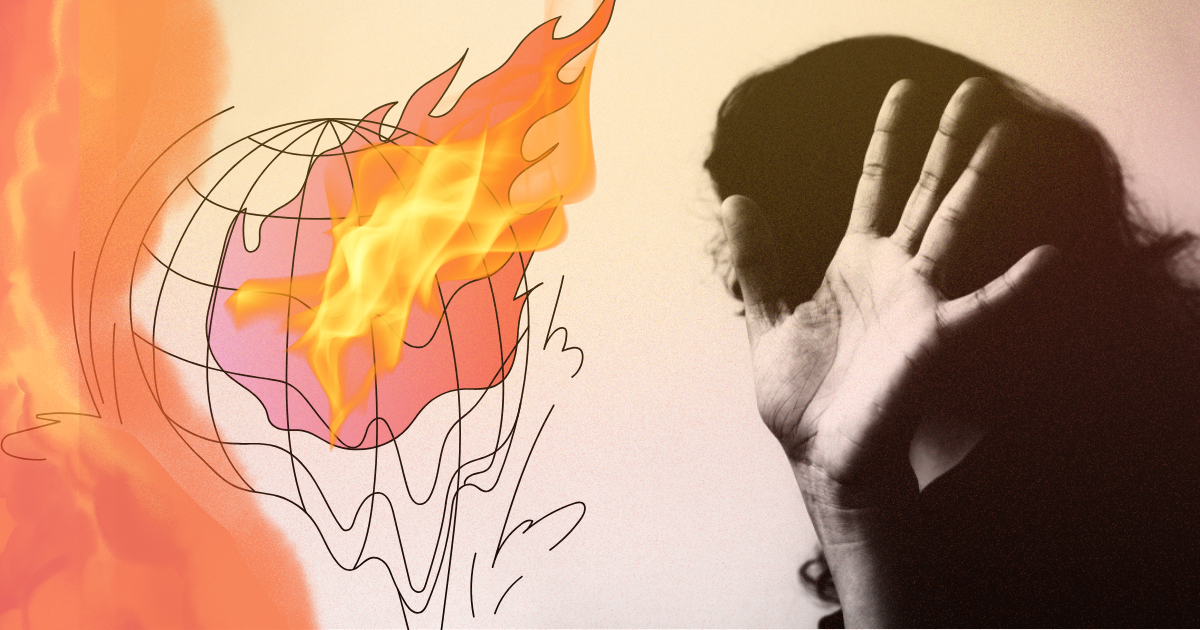
As the climate catastrophe comes nearer, the earth and its inhabitants are already facing its effects. Typically, the effects which are most discussed are natural disasters such as sea-level rise, floods and droughts all over the world. But in a world enamoured with patriarchy, racism and extreme wealth inequality, the social and political effects of the catastrophe are not going to be the same for every individual. Climate change has worsened the historical effects of the patriarchy, in that women are predicted to face the challenges of climate change far worse because of their lack of economic and legal security, which includes the rising cases of Gender-Based Violence, or GBV in short.
According to a UN report of 2025 (Colliding Crises: How the climate crisis fuels gender-based violence, 2025), at least one in three women(around one billion) face intimate partner violence in their lifetime, where violence includes physical, sexual or psychological abuse. The report also states that this number is underestimated due to underreporting of the incidents. In Bangladesh, the situation is quite worse – according to the 2024 UNFPA survey (Violence Against Women Survey, 2024), 76% women have faced at least one form of intimate partner violence in their lifetime. It can probably be assumed that underreporting in this case is much more due to societal barriers and legal hassles, which make it much harder for women to report violence.
Climate change is exacerbating this violence, and this is evidenced by multiple studies conducted. According to the same UN report of 2025, every 1-degree rise in temperature is associated with a 4.7 per cent rise in Intimate Partner Violence, and with a 2-degree rise will result in an additional 40 million women and girls experiencing IPV by 2090. It’s not a surprise that Bangladesh is also vulnerable to these effects from two directions.
Bangladesh is poised to be one of the countries which will be most affected by climate change, and the country has been experiencing that for a while. The average temperature is predicted to rise between 1 and 1.5 degrees by 2050, even if all preventive measures recommended by the Paris climate change agreement of 2015 are maintained (Bangladesh: Rising Temperature Affects Living Standards of 134 Million People, September 26, 2018), which will accelerate the process of part of the country getting submerged under sea due to rising sea levels, as well as internal displacement. On the other hand, the justice system for women who are victims of Gender-based violence remains inadequate due to a multitude of factors, including the patriarchal structure of society. Societal pressures force women to stay silent about domestic violence, and even if they do, many do not have the financial support to file a case against their partner and fight the legal battle.
Bangladesh also has an acute problem of child marriage. Although there are multiple factors behind the rise of child marriage and related propaganda on social media, economic reasons remain one of them in rural areas. With climate change destroying more land and livelihoods, child marriages are at risk of increasing, which in turn leads to more abuse. Therefore, it is quite certain that if immediate action is not taken, this trend will continue and make Bangladeshi women much more prone to violence.
The state must respond with women-friendly climate policies, and recognise the fact that women in general are much more prone to disadvantage due to the effects of climate change. The women from the marginalised areas must be empowered to collaborate with the experts to solve the ecological crises. The legal structures must be strengthened to combat Gender-based violence as well, including supporting the victim against threats from the partner and their family. Social media campaigns and textbooks can be effective in informing citizens about Gender-based violence and what rights they have to fight against it.
Bangladesh must also focus on building a climate-friendly future and head towards sustainable development. At this stage, environmental concerns have stopped being a luxury and turned into a necessity, because otherwise a large section of the population risks losing their homes and livelihoods. Mega projects such as the Rampal Power Coal Plant or the Rooppur Nuclear Power Plant must be reevaluated based on the environmental guidelines, and proper waste management must be ensured. Climate change does require international efforts to solve it, but as a state, Bangladesh must ensure its own environmental sustainability. Otherwise, the remaining fractures in society, such as income inequality, political instability, or violence towards women and children, will multiply and lead to a total breakdown.
June 5th is celebrated as World Environment Day worldwide, in Bangladesh as well. It is a day Bangladesh should remind itself of its unique vulnerabilities and challenges due to climate change, because of its geological position and history, which has seen colonial powers extracting and destroying its ecology in search of profit. The past cannot be changed, certainly, but the future can. Bangladesh must plan for a better and more eco-friendly future for its own survival. That should be the commitment of World Environment Day.
References:
1) https://bangladesh.unfpa.org/en/topics/gender-based-violence-0
3) Bangladesh: Rising Temperature Affects Living Standards of 134 Million People
Sadman Ahmed Siam is an independent columnist and a student at the Islamic University of Technology.
