

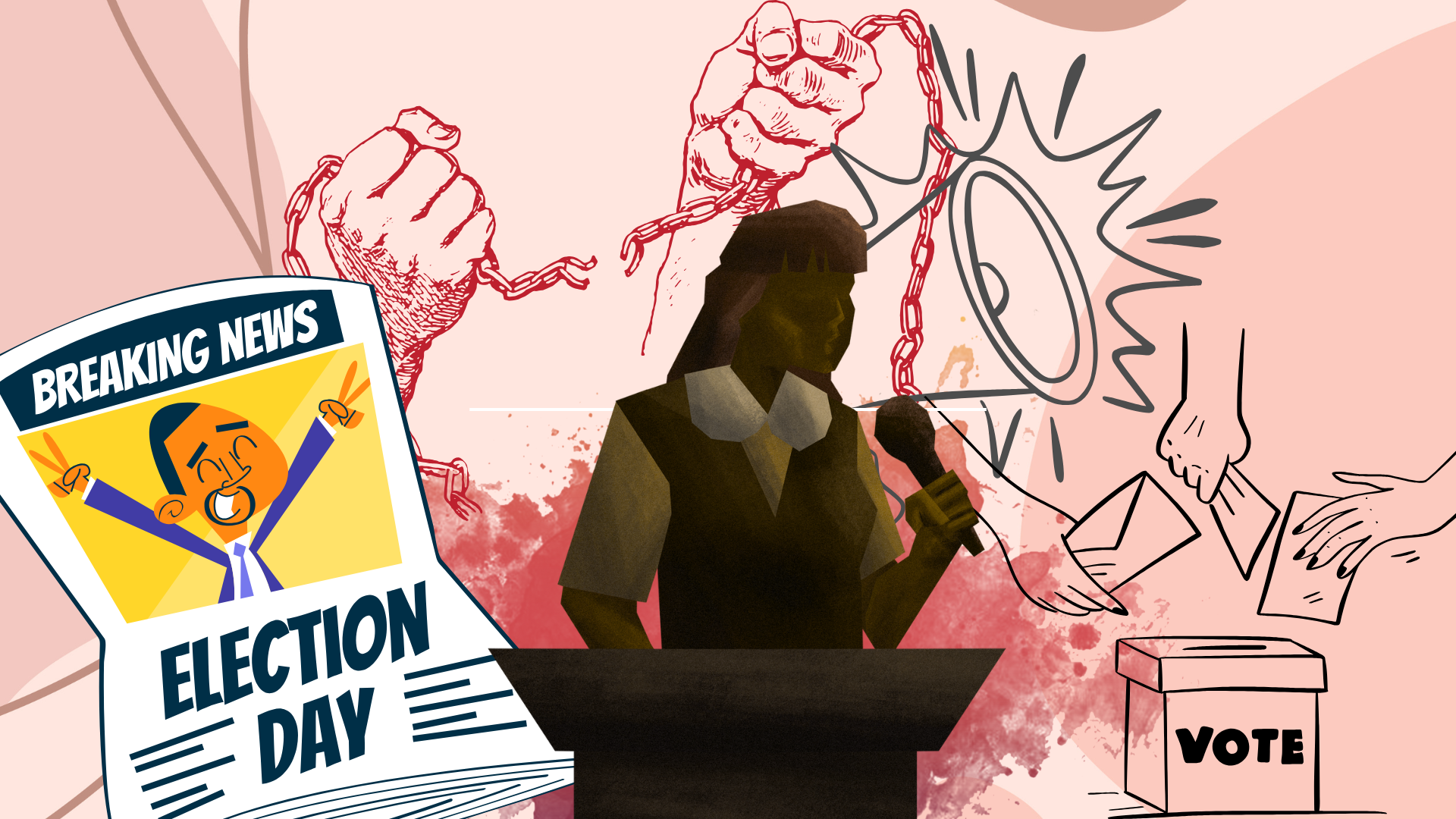
Bangladesh does not lack politically capable women. We have seen women lead on the streets, organise relief, run unions, mobilise voters, shape public debate, and hold communities together during crises. We have also seen women occupy the very top of the state. For decades, the country was defined by the rivalry of two women who stood as prime minister and opposition leader. Yet the moment we look beyond the top layer, women largely vanish from the spaces where nominations are decided, constituencies are controlled, and state power is distributed.
The latest election numbers make this pattern hard to ignore. Only around 109 out of 2,568 parliamentary aspirants are women, roughly 4.24 percent. Thirty of the 51 parties contesting the upcoming polls have fielded no women at all. Even among parties that nominated women, none gave more than 10 tickets. In several parties, women appear mostly as independents or without strong party backing. This is not a minor gap that can be explained by “time” or “culture”. It is a predictable outcome of how our parties organise power.
The most revealing contradiction is this: women are visible during movements, but sidelined during elections. That is because movements are open politics, while elections are controlled politics. Movements reward courage, communication skills, trust networks, and collective energy. Party nominations reward access, money, and internal bargaining. The route from activist to candidate is not a natural progression. It is a gated route.
In most parties, candidate selection is not a transparent assessment of competence. It is a negotiation shaped by patronage networks, local brokers, factional loyalty, and financial muscle. The language of “winnability” often hides what is really being measured: who can self fund, who can mobilise loyal groups quickly, who can negotiate with powerful local actors, and who can survive intimidation. Women are routinely kept away from the networks that produce this kind of “winnability” because those networks are built through business ties, informal cash flows, and male dominated social spaces. When parties say women candidates are “not strong enough”, they often mean women have not been allowed to become strong within the party’s own system.
Reserved seats have become one of the main tools for maintaining this arrangement. The 50 reserved parliamentary seats allow parties to claim representation without giving women constituencies, direct voter accountability, or independent political bases. If a party can appoint women after winning, it can continue to deny women the right to win. Over time, reserved seats can become a convenient substitute for real contestation. They create the appearance of inclusion, while leaving the main electoral field untouched.
But the deeper problem is not only low numbers. It is the denial of decision making power.
Even when women enter parliament, they are often not placed where power is actually exercised. They are rarely dominant in the strongest committees, rarely trusted with influential policy portfolios, and frequently treated as vote banks rather than political thinkers. Many are expected to provide loyalty, not leadership. If women are present in the legislature but missing from agenda setting, budgeting, and party strategy, representation becomes symbolic. Seats can be counted, but authority remains elsewhere.
This is where Bangladesh’s biggest paradox becomes unavoidable. How did a country known globally for having a female prime minister and a female opposition leader still fail to normalise women’s political participation?
Because those leaders were not products of an equal pipeline. They were products of exceptional routes, shaped by dynastic legitimacy, political crisis, and party survival. Parties needed a unifying figure when institutions were weak and conflicts were intense, and women at the top could become that figure. But a woman at the top does not automatically transform party culture. Sometimes it even delays reform because parties point to the leader as proof that sexism is solved. It becomes an easy defence: look, we have a woman, therefore we are inclusive. Meanwhile, women remain absent from the “middle” of politics, the committee rooms, the nomination boards, the local bargaining tables, and the constituency networks that produce future leaders.
The political costs of this structure are clear. When alliances shift, when leadership changes, when crises shake parties, women candidates are often the first to be cut from “serious” calculations. That happens because parties did not build women into their normal leadership machinery. They used women when it suited the party image and returned to default male control when power became high stakes.
This structure is strengthened by everyday social policing. Women candidates are judged not only for competence but for character. Their mobility is questioned, their speech is monitored, their bodies become public property. A male candidate’s ambition is interpreted as leadership. A woman’s ambition is interpreted as arrogance, moral danger, or disruption. Parties benefit from this double standard because it provides an excuse to avoid investing in women candidates. The backlash is treated as natural, not political, so parties feel no responsibility to confront it.
Financial barriers make everything worse. Campaigning costs money and political money in Bangladesh is gendered. Property ownership, business networks, informal cash flows, and access to party donors are far more accessible to men. Even professional women often lack the political finance networks that male candidates inherit through local party circles. This is why women can thrive in activism but struggle in elections. Activism can be sustained through collective energy. Elections demand capital.
That is why women’s exclusion is not just a gender issue. It is a governance failure. When half the population is blocked from leadership, our policy agenda becomes narrower, our accountability becomes weaker, and our democracy becomes more performative. A parliament that does not reflect society is more likely to ignore everyday issues that shape women’s lives, from workplace safety to public transport, from health access to violence and legal protection. This is not because women are naturally more caring. It is because lived experience shapes what becomes urgent. If those experiences are missing from decision tables, the state becomes less intelligent.
Some parties now even promote ideas like reduced work hours for women, framing it as protection. This is a classic example of patronising politics. It treats women as fragile and in need of restriction rather than as equal economic agents who need fair wages, childcare systems, safe transport, and equal promotion pathways. Such proposals shrink women’s public presence while pretending to support women, and they reinforce the same logic that keeps women out of political leadership.
So what would meaningful change require?
First, parties must be pushed to treat women’s participation as a core democracy issue, not something handled by a separate women’s wing. Women’s wings should not be event managers who decorate rallies. They must have authority over nominations, committee representation, and policy decisions. Without internal power, women’s wings become storage rooms for women’s labour.
Second, reserved seats must stop being a comfort zone. If reserved seats exist, they should be redesigned to increase women’s electoral legitimacy and independence. Women should not enter parliament only through party selection. The mechanism should push parties toward women’s direct wins, not away from them.
Third, parties should commit to nomination targets for general seats, not only committee percentages. If parties can promise representation in theory, they can promise tickets in practice. The question is not feasibility. The question is will.
Fourth, financing must be addressed openly. Parties should create candidate support funds for women with transparent criteria, and the state should explore public financing models that reduce entry barriers for underrepresented groups. If money remains the gate, democracy remains a market.
Finally, we must shift our political imagination. We need to stop treating women leaders as rare miracles and start treating them as ordinary and expected. Women’s leadership should be normal in constituencies, in committees, in negotiation rooms, and in party strategy meetings.
Bangladesh already knows women can lead. The national election is not revealing a lack of talent. It is revealing a lack of institutional permission. Until parties share resources, nominations, and decision-making authority with women, we will keep seeing the same pattern: women will be praised as symbols, used as workers, and sidelined as contenders.
Mahmuda Emdad is the Operation Editor of Muktipotro.
