

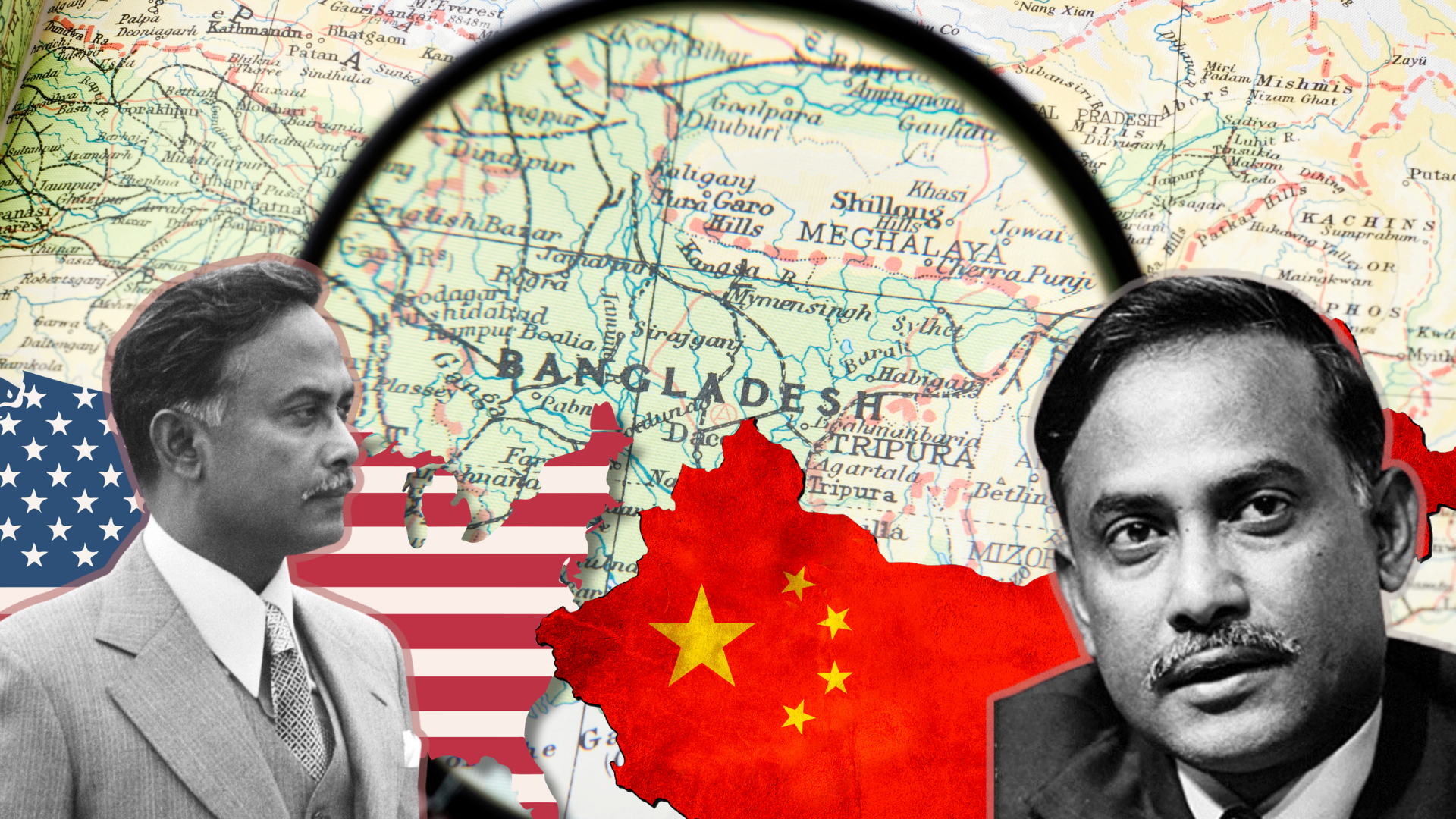
The emergence of Bangladesh as an independent state in 1971 placed it at the crossroads of South Asian geopolitics. Born out of a violent liberation war, the new nation faced immense challenges: economic devastation, political instability, international legitimacy, and regional power asymmetries. In this fragile context, foreign policy was not merely a diplomatic exercise but a matter of survival. When Major General Ziaur Rahman assumed power in the mid-1970s, Bangladesh’s external relations underwent a significant transformation. Moving away from the heavily India-centric orientation of the early post-independence period, Zia sought to recalibrate Bangladesh’s foreign policy by balancing relations with India, China, and the United States. This strategic balancing was neither accidental nor purely ideological; rather, it reflected a pragmatic response to regional realities, Cold War dynamics, and domestic political needs.
Ziaur Rahman’s foreign policy strategy can best be understood as an effort to assert Bangladesh’s sovereignty, diversify its international partnerships, and reduce overdependence on any single power. By carefully navigating between India, China, and the United States, Zia attempted to place Bangladesh within a broader geopolitical framework, enhancing its autonomy and global standing. This essay analyzes the foundations, motivations, and consequences of Ziaur Rahman’s foreign policy strategy, with particular emphasis on how he managed relations among these three major powers.
In the immediate aftermath of independence, Bangladesh’s foreign policy was shaped largely by the legacy of the Liberation War. India had played a decisive role in the military defeat of Pakistan and the creation of Bangladesh, resulting in a close bilateral relationship under Sheikh Mujibur Rahman. However, this closeness also generated perceptions—both domestically and internationally—that Bangladesh was excessively dependent on India. Treaties such as the 1972 Indo-Bangladesh Treaty of Friendship, Cooperation, and Peace, while symbolizing solidarity, also raised concerns about sovereignty and strategic autonomy.
Moreover, the global context of the Cold War further complicated Bangladesh’s diplomatic position. The United States and China had supported Pakistan during the 1971 war, delaying their recognition of Bangladesh. As a result, Bangladesh initially found itself aligned more closely with the Soviet bloc and India. By the mid-1970s, however, internal political upheavals, economic hardship, and growing dissatisfaction with the existing foreign policy orientation created the conditions for change. Ziaur Rahman emerged in this context as a leader determined to redefine Bangladesh’s national identity and international role.
Ziaur Rahman’s foreign policy vision was grounded in pragmatism rather than ideological alignment. Unlike his predecessor, Zia emphasized “Bangladeshi nationalism,” a concept that sought to distinguish Bangladesh’s identity from both Pakistani Islamic nationalism and Indian cultural dominance. This ideological shift had clear foreign policy implications: Bangladesh would pursue friendly relations with all states while prioritizing national interest and sovereignty.
Zia’s approach can be summarized through three key principles. First, diversification of diplomatic and economic partnerships to reduce reliance on India. Second, reintegration into the Muslim world and strengthening ties with China and the West. Third, active participation in regional and international organizations to enhance Bangladesh’s visibility and legitimacy. These principles shaped Bangladesh’s interactions with India, China, and the United States in distinct but interconnected ways.
India remained an unavoidable factor in Bangladesh’s foreign policy due to geography, history, and economic interdependence. Ziaur Rahman did not seek confrontation with India; instead, he pursued a more balanced and cautious relationship. While maintaining diplomatic ties and cooperation on certain issues, Zia worked to reduce Bangladesh’s perceived subservience to Indian interests.
One of the most significant shifts under Zia was the effort to internationalise regional issues. Rather than addressing all disputes bilaterally with India, Bangladesh increasingly raised concerns in multilateral forums such as the United Nations and the Non-Aligned Movement. This strategy allowed Bangladesh to gain moral and diplomatic support while limiting India’s dominance in bilateral negotiations.
Zia also sought to diversify trade and transit options to avoid excessive dependence on India. Efforts were made to strengthen economic links with the Middle East, Southeast Asia, and Western countries. While unresolved issues such as river water sharing and border disputes persisted, Zia’s approach ensured that Bangladesh engaged India from a position of greater confidence and autonomy.
Importantly, Zia resisted aligning Bangladesh too closely with Indian regional ambitions. His support for regional cooperation through what later became the South Asian Association for Regional Cooperation (SAARC) reflected a desire to institutionalize multilateralism in South Asia, thereby diluting unilateral dominance by any single power, particularly India.
Perhaps the most dramatic shift in Bangladesh’s foreign policy under Ziaur Rahman was the normalization and expansion of relations with China. China’s initial opposition to Bangladesh’s independence had delayed diplomatic recognition, but Zia recognized the strategic importance of engaging Beijing. Establishing strong ties with China served multiple objectives: balancing India, gaining access to military assistance, and diversifying economic partnerships.
Under Zia, Bangladesh-China relations improved rapidly. China became a key supplier of military equipment, helping Bangladesh modernize its armed forces without relying on India or Western powers. This military cooperation had significant strategic implications, enhancing Bangladesh’s defense capabilities and signaling its independent foreign policy posture.
Economically, China offered opportunities for trade, infrastructure development, and technical assistance. Politically, Chinese support in international forums strengthened Bangladesh’s diplomatic position, particularly on issues related to sovereignty and non-interference. Zia’s engagement with China was not merely reactive but part of a broader strategy to embed Bangladesh within a multipolar Asian framework.
At the same time, Zia carefully avoided provoking India by framing Bangladesh-China relations as pragmatic rather than antagonistic. This delicate balancing act demonstrated his ability to navigate regional sensitivities while advancing national interests.
Relations with the United States represented another crucial dimension of Ziaur Rahman’s foreign policy. Following the Liberation War, U.S.-Bangladesh relations had been strained due to Washington’s support for Pakistan. Zia recognized, however, that improved ties with the United States were essential for economic recovery, international legitimacy, and strategic balance.
Under Zia, Bangladesh actively sought closer relations with the United States through diplomatic engagement, economic cooperation, and participation in international financial institutions. U.S. aid, both bilateral and through multilateral agencies, played an important role in Bangladesh’s development efforts, particularly in food security, infrastructure, and health.
Zia’s alignment with the United States was not ideological but transactional. While maintaining Bangladesh’s non-aligned status, he positioned the country as a moderate, stable, and cooperative state in a volatile region. This approach appealed to U.S. strategic interests during the Cold War, particularly in the context of South Asia’s shifting power dynamics.
Crucially, improved relations with the United States also enhanced Bangladesh’s bargaining power vis-à-vis India and China. By engaging all major powers simultaneously, Zia avoided overdependence and preserved strategic flexibility.
Ziaur Rahman’s foreign policy must be understood within the broader Cold War framework. Rather than aligning firmly with either the Soviet or Western blocs, Bangladesh under Zia pursued a form of pragmatic non-alignment. This approach allowed the country to extract economic and political benefits from multiple sources while minimizing ideological constraints.
The balancing of India, China, and the United States reflected an astute understanding of global power politics. India’s close ties with the Soviet Union, China’s rivalry with both India and the USSR, and the United States’ strategic interests in South Asia created a complex triangular dynamic. Zia leveraged this complexity to Bangladesh’s advantage, ensuring that no single power could dominate its foreign policy.
This strategy also reinforced Bangladesh’s image as an independent and responsible actor on the international stage. Participation in the Non-Aligned Movement, the Organization of Islamic Cooperation, and the United Nations further institutionalized this balanced approach.
Ziaur Rahman’s foreign policy strategy yielded several tangible achievements. Bangladesh gained broader international recognition, diversified its diplomatic partnerships, and strengthened its defense and economic foundations. The country’s relations with China and the United States improved significantly, while ties with India became more balanced and less asymmetrical.
However, the strategy also had limitations. Structural constraints such as economic dependency, geographic vulnerability, and domestic political instability limited Bangladesh’s ability to fully capitalize on its diplomatic gains. Some critics argue that Zia’s distancing from India exacerbated mistrust and slowed progress on key bilateral issues.
Nonetheless, these limitations do not diminish the strategic coherence of Zia’s foreign policy. Rather, they highlight the inherent challenges faced by small states navigating great power politics.
Ziaur Rahman’s foreign policy legacy continues to shape Bangladesh’s external relations. The emphasis on balance, diversification, and strategic autonomy remains central to contemporary Bangladeshi diplomacy. Subsequent governments, regardless of ideological orientation, have largely maintained the core principles established during Zia’s tenure.
In an era of renewed great power competition, particularly between the United States and China, Zia’s approach offers valuable lessons. His foreign policy demonstrates how small and middle powers can exercise agency by leveraging multipolar dynamics rather than succumbing to dependency or alignment.
Ziaur Rahman’s foreign policy strategy represented a decisive shift in Bangladesh’s international orientation. By balancing relations among India, China, and the United States, he sought to assert national sovereignty, enhance strategic autonomy, and promote economic development. This balancing act was neither simple nor without risk, but it reflected a clear-eyed assessment of Bangladesh’s geopolitical realities.
Ultimately, Zia’s foreign policy was an exercise in pragmatic statecraft. It moved Bangladesh beyond the shadows of its birth and positioned it as an independent actor capable of navigating complex regional and global dynamics. In doing so, Ziaur Rahman left an enduring imprint on Bangladesh’s diplomatic identity—one defined not by alignment, but by balance.
Mahmud Newaz Joy is a graduate of the Department of Mass Communication and Journalism at the University of Dhaka.
