

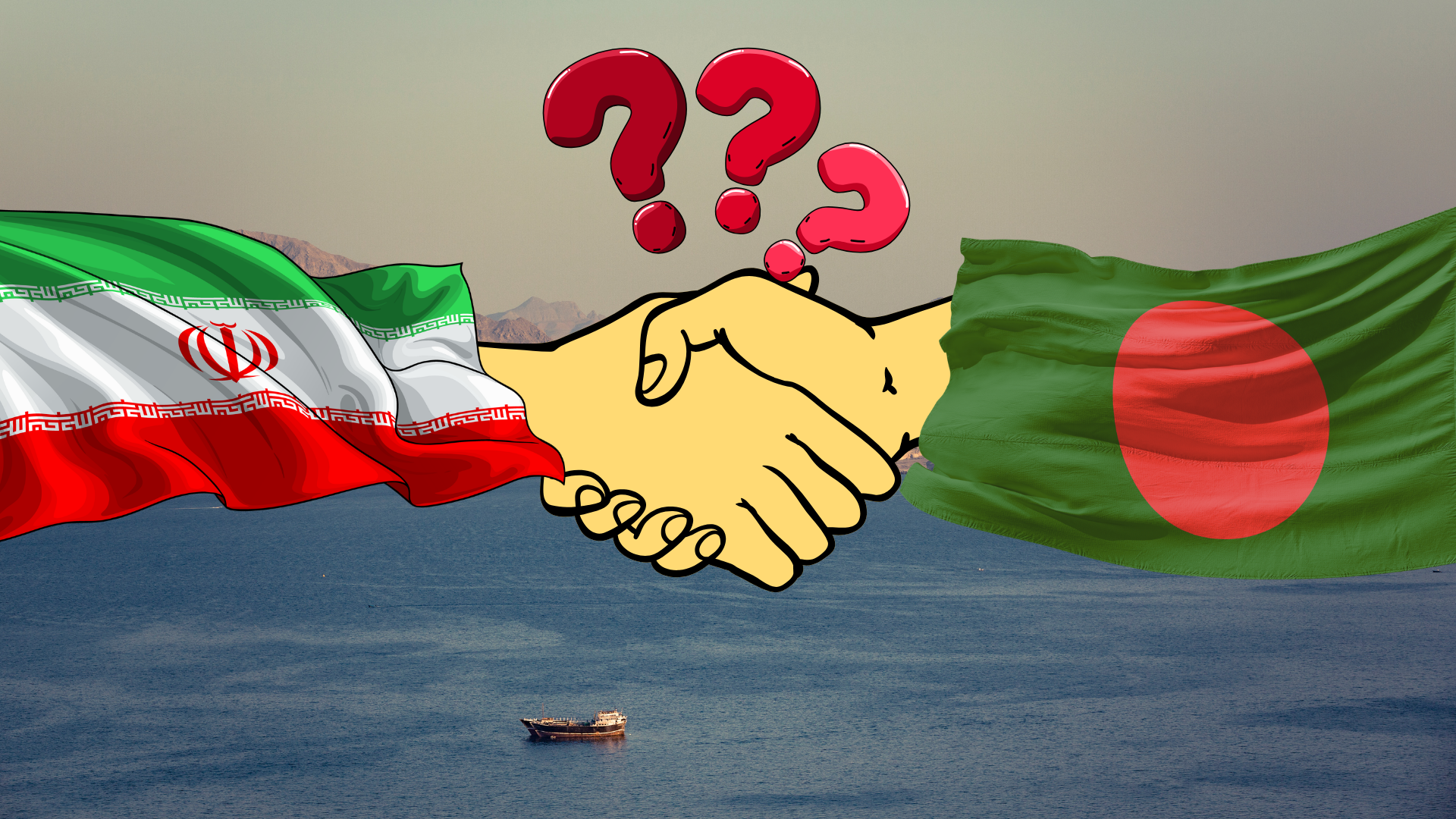
On February 28, 2026, the United States and Israel commenced joint airstrikes on Iran under Operation Epic Fury, which resulted in the killing of the long-term Supreme Leader Ali Khamenei. In retaliation, Iran’s IRGC successfully sealed the Strait of Hormuz to most container ships, resulting in shipping traffic plummeting to near zero and closing roughly 20% of the world’s daily oil supply.
Iran agreed to let Bangladeshi tankers move through the Strait at the request of Dhaka’s initiatives to mobilise its unstable economy and regard its urgent need for energy-based resources, i.e., fuel and gas. Bangladesh directly requested Iran, and the energy officials held a meeting between the Ministry of Energy Minister Iqbal Hasan Mahmud Tuku and Iranian Ambassador to Dhaka Jalil Rahimi Jahanabadi, during which Bangladesh urged Iran to allow free passage of its oil-carrying ships.
Under the agreement, Bangladeshi energy officials must notify Iran whenever a ship enters the strait, and the Iranian ambassador asked local officials to share required information about Bangladeshi flag carrier tankers with Tehran before they start. Most importantly, Bangladesh’s ships must disclose information about themselves to Iranian authorities to receive secured passage.
In essence, Iran is engaging exclusive passage rights as a geopolitical tool, allowing countries it sees as neutral or friendly while restricting containers linked to the US, Israel, and their close allies. Bangladesh, a developing nation with a real fuel crisis and no significant ties to the US-Israel military campaign, made a direct diplomatic overture, and Iran accepted it as a goodwill gesture.
Now, from the critical point of view, it may be regarded as a real diplomatic win for Bangladesh, but one with important conditions. Here’s a critical assessment:
But the success is a future warning and fragile.Bangladesh took the immediate measure of closing the universities early for the summer due to the high global energy crisis. Further, it indicates the exemption doesn’t protect it from the extended economic shock and responses of the crisis. The future crises are visible all over the place, as no one knows when this war will end.
Bangladesh, once again in the same old cycle of warzone crisis, is deeply vulnerable to restrictions in maritime energy flows as one of the heavily dependent countries of refined petroleum products, and the exemption covers only Bangladesh-flag carrier vessels, not all the containers carrying essential goods it needs.
The arrangement requires Bangladesh to mostly register its ships with Iranian authorities before every passage, and it is a bit complicated, as those containers might be under U.S. ownership. The entire process is like a pendulum and heavily depends on Iran’s goodwill that could be taken back at any time.
Bangladesh is also planning direct purchase outside long-term conditions, as deliveries under current conditions have become uncertain. The sources from Dhaka suggest the supply chain challenges seem too far from being resolved.
Bangladesh needs to initiate an immediate and pragmatic solution for the future energy crisis. It requires exploring alternative energy sources, starting from solar, electric, and wind sources, as Bangladesh does have significant potential. The country can ask for the exchange of resources with those countries that are efficient in resources like solar and wind. Petrobangla is to be the next lead, which might prepare a clear road map for Bangladesh, along with a specific vision within the current government’s term of 2030, and make more negotiations for the alternative resources along with the BAPEX (Bangladesh Petroleum Exploration and Production Company Limited) and this a state-owned company under Pterobangla, requires to have structural reform and alignment with international best practices in renewable energy policies as it is lagging behind and heavily depending on the outsourced companies. The country needs to accumulate all the current resources and experts under one umbrella to initiate a plan for not heavily depending on the outsourcing of energy sources. Bangladesh could start initiating discussions about technology-transfer conditions with countries like India, China, or Germany, which have advanced renewable energy infrastructure. The roadmap is possible if only political will matches the urgency of the crisis.
Last but not least, securing approval when most of the world is struggling to navigate is a real diplomatic success and is deemed a pragmatic foreign policy achievement. But it’s more of a damage-control success than a sustainable solution. Bangladesh is still on the edge of an uncertain global future, and the war that no one knows when it will end. The question is, is it too early to celebrate the success when there is no long -term plan and sustainable measures for the future energy crises?
Natasha Israt Kabir is an accomplished development professional and researcher with extensive experience in humanitarian response, gender advocacy, and disability rights. With over two decades of service beginning in 2003, she brings a unique interdisciplinary perspective to international development, combining academic excellence with grassroots community engagement.
